
Forecast for the Salt Lake Area Mountains

Brooke Maushund
Issued by Brooke Maushund on
Sunday morning, April 5, 2026

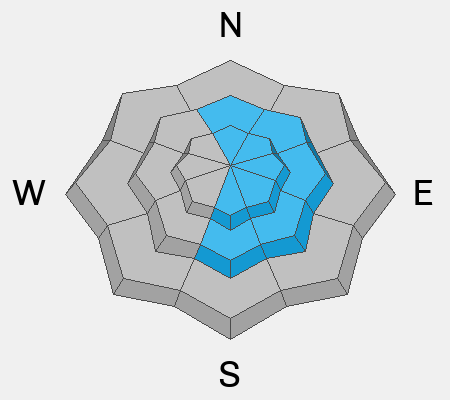
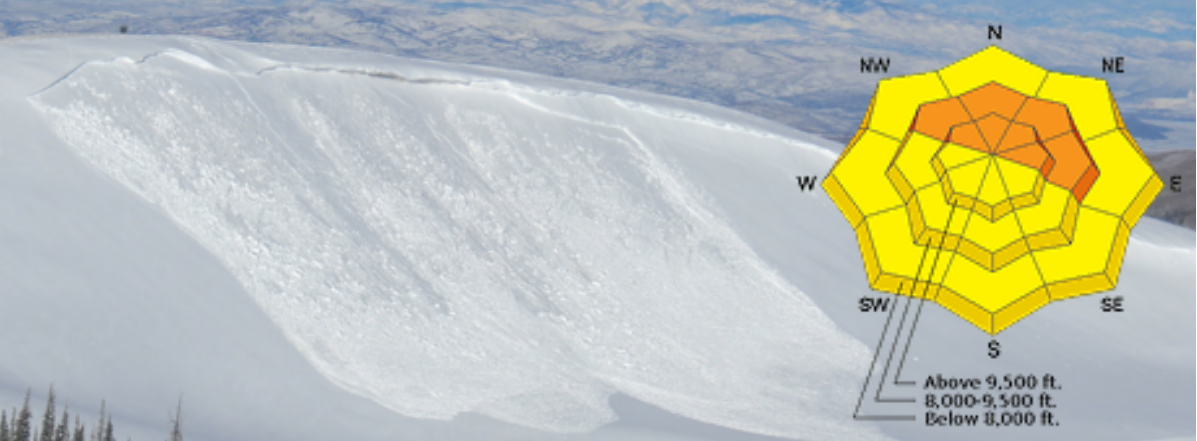
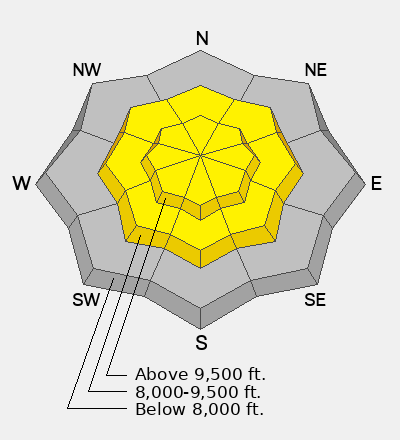
The avalanche danger is MODERATE. You can find slabs of wind-drifted snow 1-2'+ thick on most N-E-S facing slopes that can break hundreds of feet wide. These were responsible for 18 skier-triggered avalanches, including 10 catch and carries, on Friday. As temperatures rise well above freezing for the first time since the storms, expect wet avalanche activity to increase in likelihood and size throughout the day on most slopes.

If the weather forecast verifies, danger could rise to CONSIDERABLE by this afternoon for wet snow activity.
Low
Moderate
Considerable
High
Extreme
Learn how to read the forecast here
Special Announcements

New UAC Podcast Episode: Longtime local professionals Jenna Malone and Chris Brown sat down with us to discuss Utah's Backcountry Culture and Etiquette—especially relevant this weekend. Give it a listen on your ride upcanyon, and maybe take a look at Jenna's timeless Ascent Backcountry Snow Journal piece "Mountain Manners (and why they matter)"

Human Factor Research: Researchers Ian McCammon and Sara Boilen are developing new tools for managing human factors for backcountry skiers and boarders. This survey asks about personal experiences with human factors and will take 7-8 minutes to complete. Link is HERE

Weather and Snow

Last week, two storms delivered 20-30" and up to 3.35" of water to the upper Cottonwoods and 14-20" along the PC Ridgeline. Wednesday's storm snow bonded well to the old surface. However, due to warm temps and greenhousing during that system, Thursday's storm snow did not bond well to crust on top of the previous day's snow. This interface between storms was responsible for Friday's spike in avalanche involvements/activity.

Yesterday, temps were cooler than forecast, climbing above freezing in the 30s F just during the heat of the day, with light variable winds in the single digits MPH. The sun shined strong the entire day.

Today, winds will remain calm to light, with mountain temperatures forecast to reach into the low to mid 40s F. Skies will remain clear and sunny until the late morning/afternoon, as clouds start to build into the evening.

We just published February 2026: Four Avalanche Fatalities in Five Days: a community review with most of the UAC Salt Lake office. This 38-minute video is worth sitting down and digesting. A huge thanks to UAC Education Manager & Forecaster McKinley Talty for his hard work putting this together behind the scenes.

Recent Avalanches

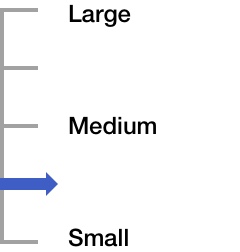
Friday brought 18 reported skier-triggered avalanches in the backcountry, with at least 10 catch and carries, and one helicopter evacuation due to traumatic injuries secondary to avalanche involvement. There were numerous other close calls. Yesterday only brought one reported D1-1.5 new skier-triggered slide on Figure 8s, with additional activity from the previous days coming in.

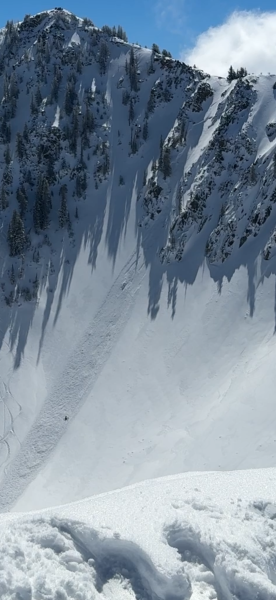
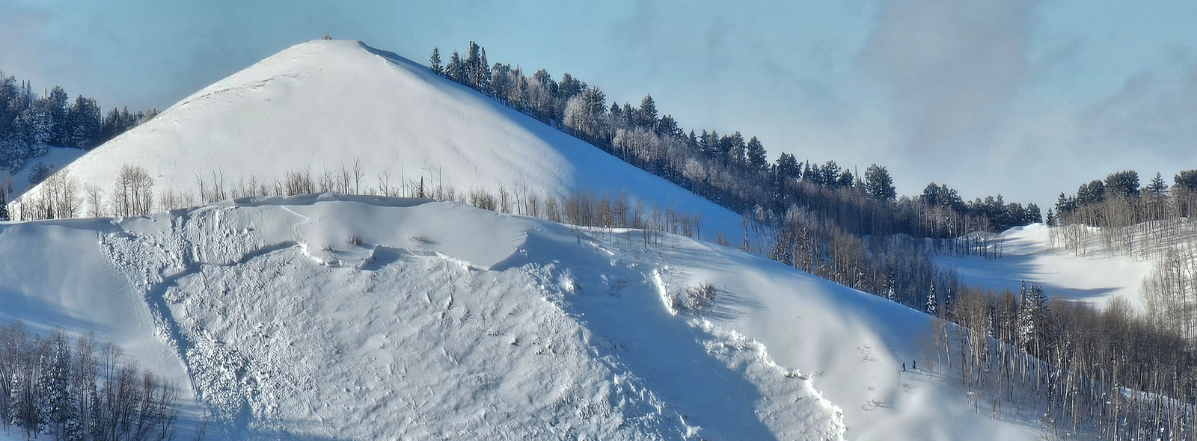
Monte Cristo (11,000', E): Dave Kelly reported this slide to us, likely occurring in the last couple of days.

Mitigation teams in Upper LCC yesterday reported reactive results reaching up to D2-D2.5 in size. Backcountry observations from both LSB and the PC Ridgeline reported a significant drop in the reactivity of the storm snow yesterday, and minimal wet snow activity. More can be found HERE.

Avalanche Problem #1
Wind Drifted Snow
Type
Location
Likelihood
Size
Description

Friday's 18 skier-triggered avalanches and 10 catch and carries were primarily running as soft-slabs of wind-drifted snow on the interface between Wednesday’s and Thursday’s storms. These were also areas out of the wind zone, like on Sunset Peak’s apron, that fell more in line with storm slabs. These all are instabilities within the new snow.

Jenna Malone's ob from yesterday phrased things quite well, "(Friday)'s storm slab avalanches acted (briefly) like PWL avalanches (remote triggers, widespread connectivity, propagation of slab well uphill from the trigger), even though they were failing on the storm interface, not a persistent grain type. I'm guessing this was from the combination of new snow with a variety of grain types (DF, graupel, stellars), wind transport, and the rapid spring warming/ solar input. (On Saturday), we found decreased sensitivity in the areas we travelled, consistent with rapidly settling storm slab."

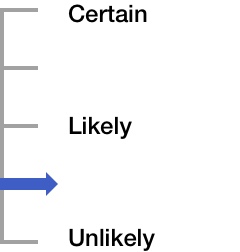
While the sensitivity of this new snow is settling out, we cannot rule out these slides today, both at upper and mid elevations, near ridgelines and mid-slope catchment features such as gullies and convex rolls. There’s also a possibility that on more sheltered northerly terrain, you’ll be able ot trigger small, dry loose slides that could knock you off your feet in the new snow. Safer riding conditions can be found on terrain out of the wind zone, and in lower-angle terrain.

A very lucky skier who went for a ride in the steep, wind-drifted terrain of Wolverine Cirque on Friday. They were lucky to only lose a ski.

Avalanche Problem #2
Wet Snow
Type
Location
Likelihood
Size
Description

Yesterday was the first day since the new snow fell that temperatures were forecast to rise above freezing. While yesterday was plenty sunny, temperatures stayed a bit cooler that forecast, just near freezing in the 30s F during the heat of the day in many mountain locations.

Today, temperatures are forecast to rise into the 40s F, with clouds building in the afternoon. If this verifies, we are likely to see our first round of wet snow activity heading into the heat of the day, which means the danger could rise to CONSIDERABLE into the afternoon . Wet snow activity is most likely on steep slopes that face the sun, starting near rock bands or cliffs..however, observers noted snow starting to become wet on NW and NE aspects as well yesterday. If you start to see roller balls or pinwheels, it’s a sign to change aspects or head back to the car.

Roller balls like the one Scheuerlein observed yesterday are warning signs of wet snow avalanches.

General Announcements

This information does not apply to developed ski areas or highways where avalanche control is normally done. This forecast is from the U.S.D.A. Forest Service, which is solely responsible for its content. This forecast describes general avalanche conditions and local variations always occur.