Forecast for the Ogden Area Mountains

Brooke Maushund
Issued by Brooke Maushund on
Friday morning, March 6, 2026

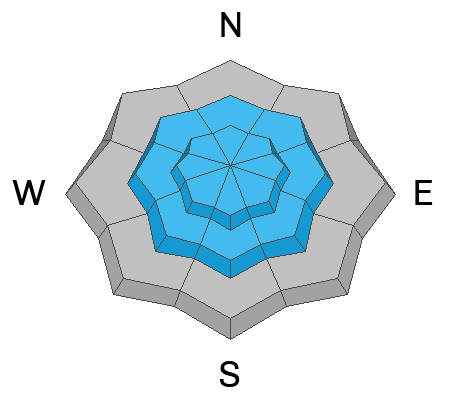
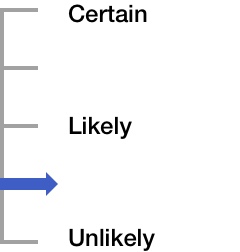
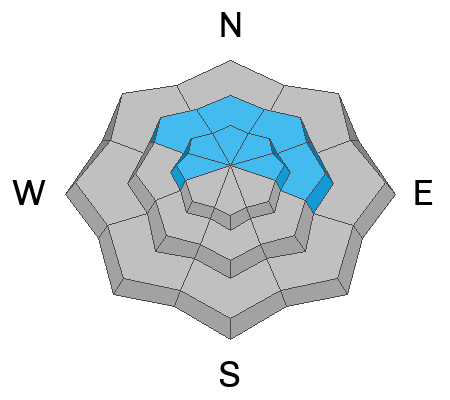
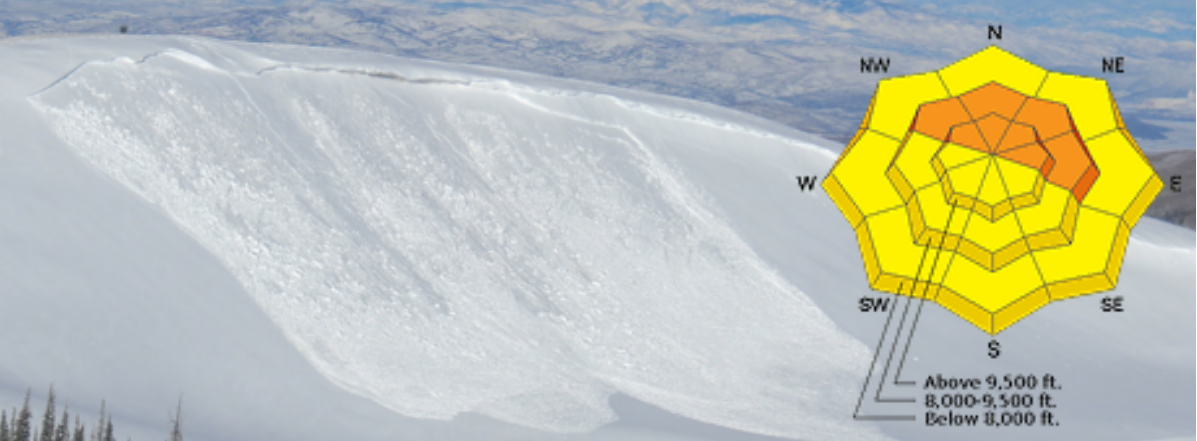
MODERATE avalanche danger exists on most slopes where you can trigger slabs of wind-drifted snow at mid- and upper-elevations large enough to catch and carry you. On most mid- and upper- elevation slopes facing W-N-E, it is still possible to have one of these smaller slides step down to a buried persistent weak layer (PWL) failing 1-3 feet deep that could fully bury you.

Keep in mind that dry, loose sluffs of new snow running far and fast on crusts will be able to knock you off balance in steeper terrain.

Low
Moderate
Considerable
High
Extreme
Learn how to read the forecast here
Special Announcements

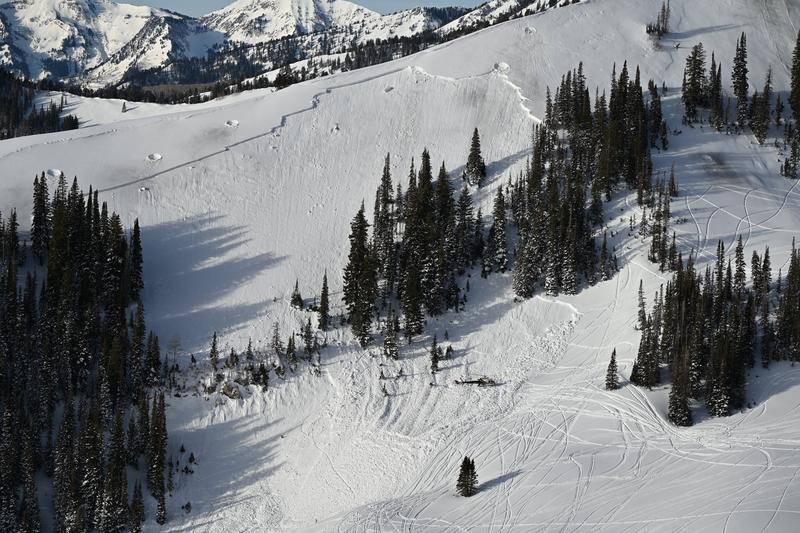
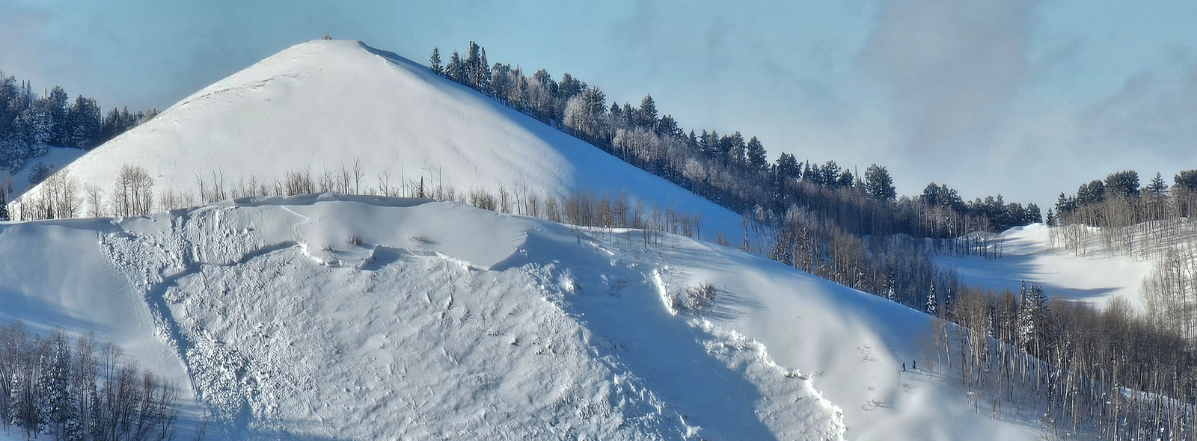
All four final avalanche accident reports (Caribou Basin, Butler Basin, Lake Mary Chutes, and Ant Knolls) are now published. These reports represent four avalanche fatalities in the five days between February 18th-February 22nd. You can find them all HERE>

Drone photo of the Caribou avalanche after avalanche control work had been conducted to reduce the risk to the SAR teams.

Thank you to everyone involved for sharing information. As with all avalanche accidents, we hope to learn something to prevent future accidents. Our deepest condolences go out to the families, friends, rescuers, and everyone affected by these tragic accidents.

Weather and Snow

Yesterday, a small system moved in on NW flow. Winds shifted to the N and blew into the 20s mph, with temps dropping throughout the day and overnight into the teens F as more snow fell.

Today, the system is largely done, with the potential for another angry inch during the day. Winds will blow from the north in the 10-20 mph, with the chance for some higher gusts in the 40s along the Ogden Skyline. This system brings a chance of lightning in late afternoon as it departs, with temps in the 20s F. The sun may come out as the storm clears. Storm totals this morning are sitting at:

  • Snowbasin: 8 inches of snow // 0.84 inches of H2O
  • Mountains East of Eden: 4-7 inches snow // 0.4-0.7 inches H2O

Tonight into tomorrow morning, we can expect clearing skies and gradually rising temps as this system moves out. Temperatures will climb near the 40s F as we head into the day tomorrow.

Recent Avalanches

Wind slab and dry loose activity at ski areas yesterday: Ski areas reported small wind slabs in the wind zone yesterday, with dry loose sluffs running far and fast on slick crusts.

Wet loose activity near Island Peak, Ben Lomond Area: Taylor Lais and I spotted wet loose activity near Island Peak from Cutler Ridge on Wednesday that likely ran the day prior during the strong sun.

See all observations from the Ogden zone HERE.

Avalanche Problem #1
Wind Drifted Snow
Type
Location
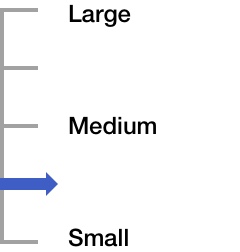
Likelihood
Size
Description

There were pockets of wind-drifted snow before this storm, and another fresh 6-10 inches fell with wind during it. Drew found small, dense wind slabs when he visited Snowbasin yesterday. Winds stayed at perfect loading speeds yesterday, meaning you can find two types of wind slabs:

  1. New, more reactive slabs will freshly built from the new snow.
  2. Older, more stubborn pockets will be harder to identify as the new snow covers the older, textured snow surfaces.

You will be able to trigger both new and old wind slabs at mid- and upper-elevations on all aspects. These will be most likely at upper elevations, near ridgelines and on exposed mid-slope catchment areas like gullies and convex rolls on slopes facing SE-E-NE. These can be as small as a pocket around your machine's ski, or big enough to wipe a rider off a slope. These may propagate wider than expected and be triggered from a distance if they fail down into the weak faceted snow from January (DJL)—more on that below.

New snow: In areas with higher accumulations, be aware of the possibility of triggering loose, dry sluffs of new snow that may run far and fast on crusts. In protected mid- to low-elevation areas, know that slabs of new snow may develop and possibly propagate widely if deposited on weaker snow or slick old crusts.

Avalanche Problem #2
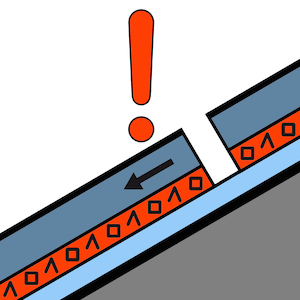
Persistent Weak Layer
Type
Location
Likelihood
Size
Description

This season's been nothing but irregular, and the Dry January Layer (DJL) is no exception right now. The weak, old snow that sat out during January is still there, and has become damp to wet in some locations with the warmer weather in the recent days. The layer is trending more stubborn since it's first loading event in recent weeks, but wet facets do weird things.

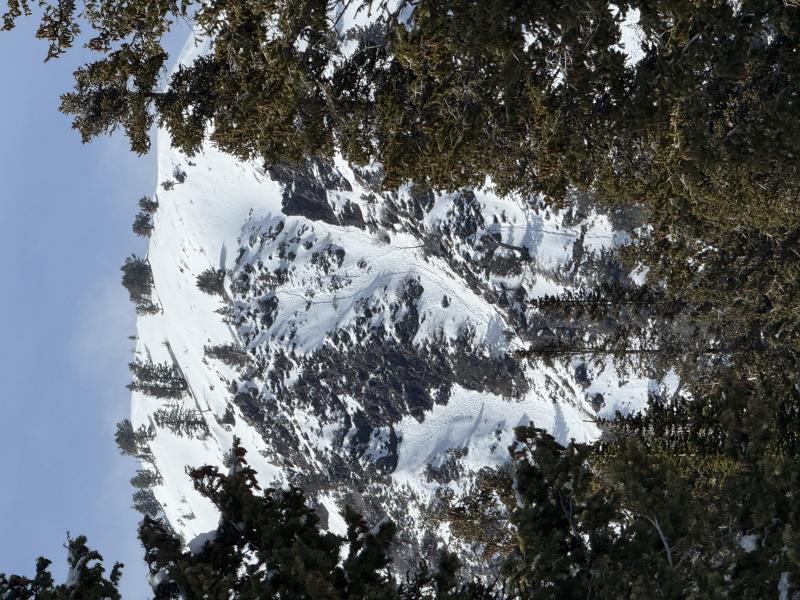
On Cutler Ridge on Wednesday, the wetted DJL to propagated with easy force (ECTP3) on our first test—see the surprising video below—before not being able to get the layer to propagate at all in the next 4 tests we conducted (ECTN). This just shows the irregularity with the snowpack this year, and how high our uncertainty is wtih more loading. This wet, warm, and weird setup is going to be a bit of a puzzle in how exactly it reacts to a sizeable loading event.

As we add more load and stress to this layer with new snow today, know it is still possible to trigger a slab on the PWL on mid- (NW-N-E) and upper elevation (W-N-E)slopes up to 3 feet deep. Any new snow or wind slab avalanches have the potential to step down into this weak, old snow and create a much larger slide than modest new snow totals might make you expect. This possibility is more likely in and along thinner, rocky snowpack areas.

I would approach any steep slope that harbors this layer of facets with caution.

General Announcements

This information does not apply to developed ski areas or highways where avalanche control is normally done. This forecast is from the U.S.D.A. Forest Service, which is solely responsible for its content. This forecast describes general avalanche conditions and local variations always occur.