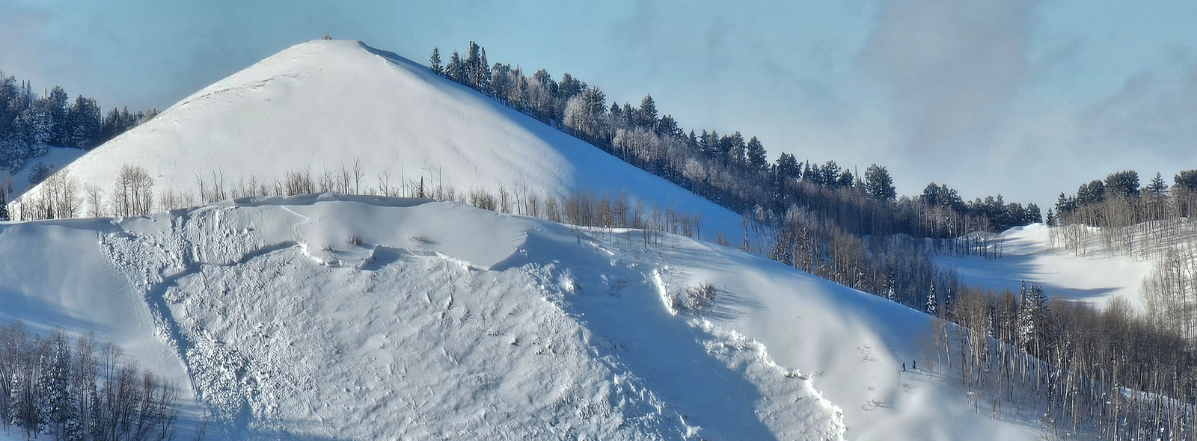
There are two concerns for wet snow avalanches:
1. Wet Loose - This will be the most common concern, with the possibility for natural and human-triggered avalanches involving wet snow near the surface. These may be long-running and gouge down into the snow pack. These avalanches are especially dangerous in steep terrain or above terrain traps such as steep-sided gullies where escaping the flow is difficult.
2. Wet Slabs - As meltwater moves deeper into the snowpack, it can pool on buried crusts or weak layers, weakening the structure and allowing avalanches to break deeper and wider. These are larger and more destructive avalanches and may occur naturally, possibly failing down around crusts that formed over the holidays in late December.
Although not a common concern in the Ogden mountains, glide avalanches occur when the entire snowpack slowly slides on the ground, typically over smooth rock slabs or grassy slopes. The terrain around the Chilly Peak Slabs is the most common area for glide avalanches.
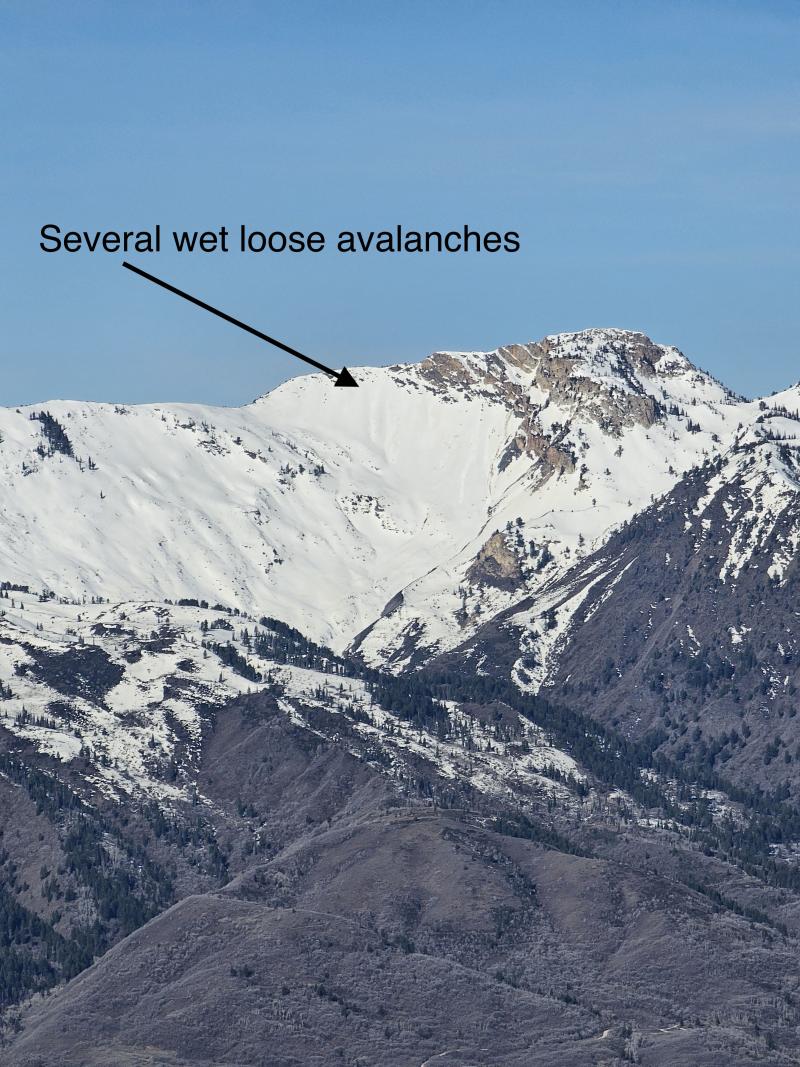
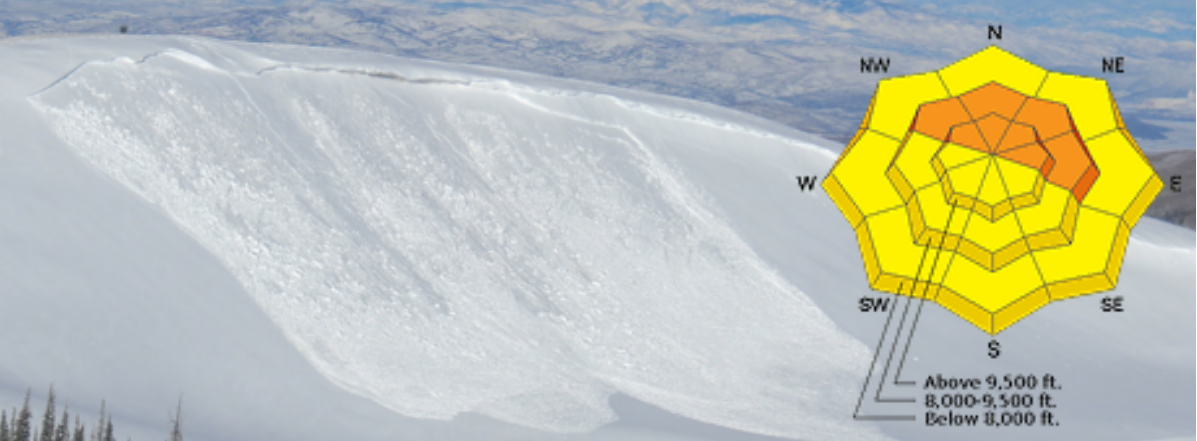
Wet-loose avalanches along the Willard Peak headwall (photo Keenan Grady)