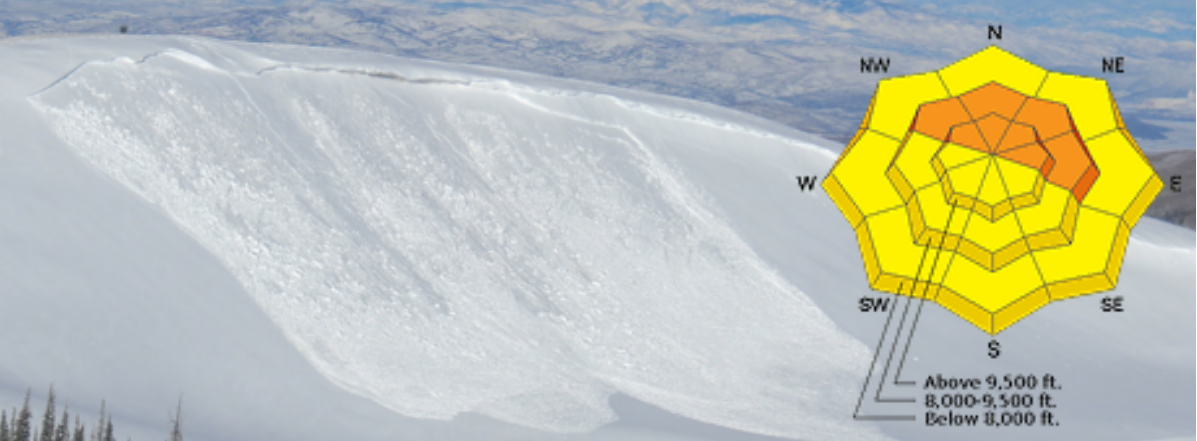
We use Normal Caution when the avalanche danger is generally LOW, and there is no specific avalanche problem. Risks are inherent in mountain travel, and there is always the potential for avalanches, including:
Wet snow: Today’s strong winds should help keep the snow surface frozen, but as skies clear and temperatures rise, wet loose avalanches will become possible in sunny, wind-sheltered terrain.
While today does not seem like the day, we want to start thinking about large wet slab avalanches as well. As temperatures continue to climb, we know we have a very structured snowpack with a wide variety of crusts, facets, and layers. Start paying attention to how supportable the snow surface is, how superficial the overnight freezes are, and how saturated the snowpack is becoming. These larger avalanches will likely move to the forefront as the week continues.
Glide avalanches have been releasing naturally in the past week in the Salt Lake mountains and we have some similar terrain in the Ogden mountains. These full-depth and destructive slides are difficult to forecast, and it's worth avoiding known habitat (on steep and smooth rock slabs) and their runout zones, such as the Chilly Peak Slabs.
Wind-drifted snow: You may find small pockets of wind-drifted snow in exposed terrain at the upper elevations.
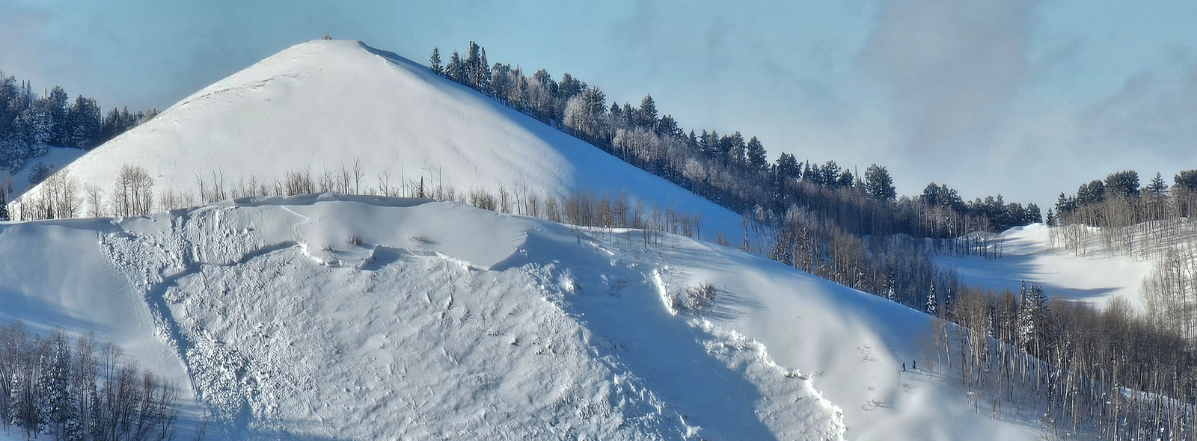
Cornices: These tend to calve naturally in the spring. Avoid being on or beneath these ridgeline hazards, especially as temperatures rise.
Persistent weak layer (PWL): This was dropped as an avalanche problem this weekend, but the potential still exists for an avalanche to fail on the PWL on steep, north-facing, upper-elevation slopes where the snowpack is unsupported, such as around rocks. See the conversation in the general announcements below. With skyrocketing temperatures, the PWL could return to the forecast in the next few days.