Forecast for the Moab Area Mountains

Dave Garcia
Issued by Dave Garcia on
Wednesday morning, January 21, 2026

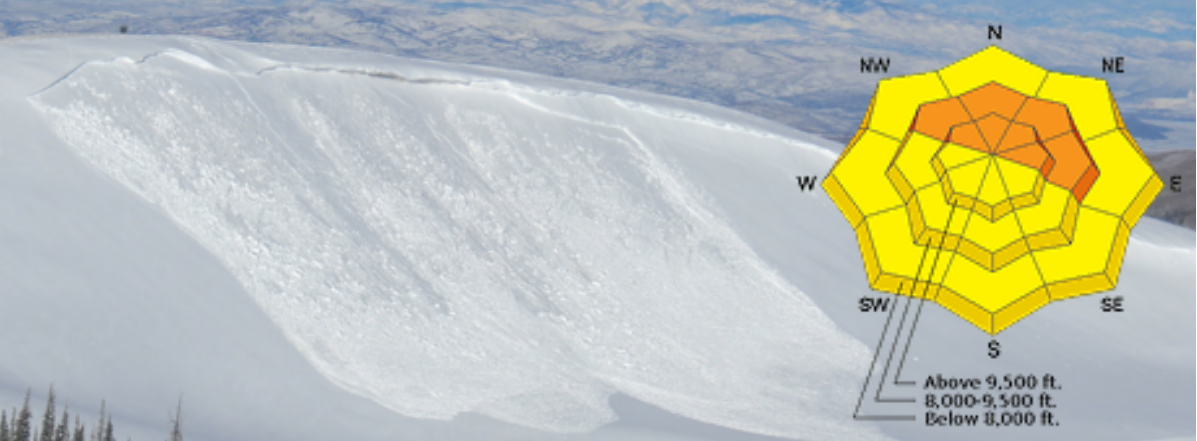
While the odds of triggering an avalanche are decreasing, a MODERATE danger remains for human-triggered hard slab avalanches failing on a deeply buried persistent weak layer. This problem exists on all steep slopes near treeline and above that face NW through E, with the greatest concern on north and east aspects. Avalanches breaking on this layer would be 2 to 5 feet deep and could propagate widely. The simplest way to avoid this problem is to stick to slopes less than 30 degrees.

Low
Moderate
Considerable
High
Extreme
Learn how to read the forecast here
Special Announcements

Geyser Pass Road Conditions: The road is mostly dry dirt up to the Trans La Sal TH with patches of ice and packed snow above.

Grooming: Geyser Pass was groomed on Saturday.

We are looking to reschedule our Moab Backcountry 101 Class to February 20, 21 in the hopes that we will have more snow. Click here for information and registration. Moab and Monticello locals can use the discount code MOAB-LOCAL for a 10% discount.

Weather and Snow

24 Hour Snow: 0" 72 Hour Snow: 0" Season Total Snow: 36" Depth at Gold Basin: 22"

Winds on Pre-Laurel Peak: NW 10-20 Temp: 14F

Weather

Under few clouds, it is 14°F in Gold Basin this morning. Winds are moderate out of the northwest. Today, winds will shift and blow from the west at 10-20 MPH. Skies will be mostly sunny, and high temperatures will reach 33°F at 10,000. Cloud cover will increase tomorrow. We are monitoring a low-pressure system in the eastern Pacific. The low will become cut off and move inland on Friday. The center of the low will dive well to the south, bringing significant moisture to New Mexico and Texas. This system will at least break the long January dry spell, and we can expect light accumulations on Friday and Saturday. Stay tuned for more information on this upcoming storm.

General Conditions

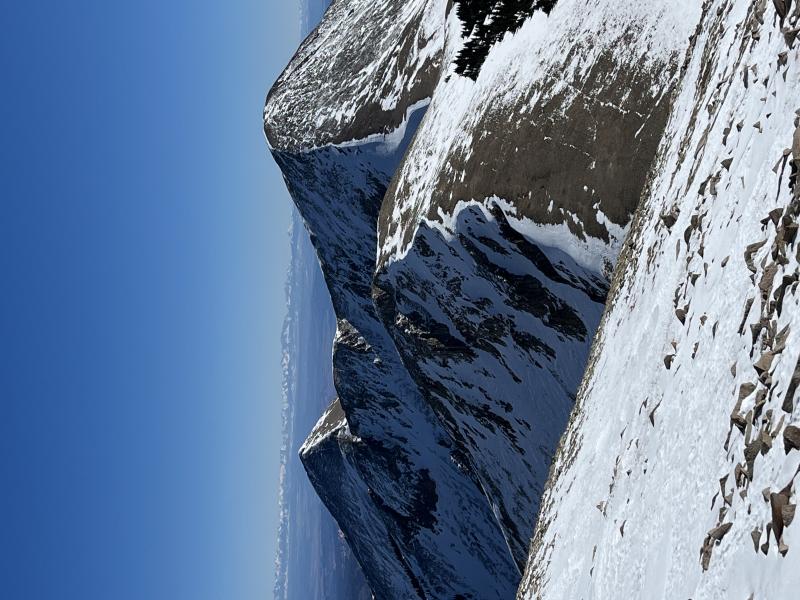
Nate and I traveled up to Mann's Peak yesterday to get a look at terrain in the high alpine. Solar aspects are beaten down by sun and wind, and recent cold temperatures have prevented them from softening up in the afternoon. All aspects near and above treeline have seen extensive wind damage, and high-elevation northerlies were looking particularly rough. I'm running out of adjectives to describe just how poor the snow surface is after more than two weeks without snow and almost constant wind up high. The bottom line is that we really need some snow.

We still have concerns about weak faceted snow near the ground beneath the Christmas rain crust. It remains possible for skiers and riders to trigger deep, hard slab avalanches near and above treeline where this poor structure exists. When considering the low reward for dropping into big north faces right now, it doesn't seem worth the risk.

Looking out towards a heavily scoured Mt. Tomasaki. (Nate Ament Photo)

Snowpack and Weather Data

Gold Basin SNOTEL site (10,000')
SNOTEL site near Geyser Pass Winter Trailhead (9600')
Wind Station on Pre-Laurel Peak (11,400')
NWS forecast for the La Sal Mountains.
Recent Avalanches
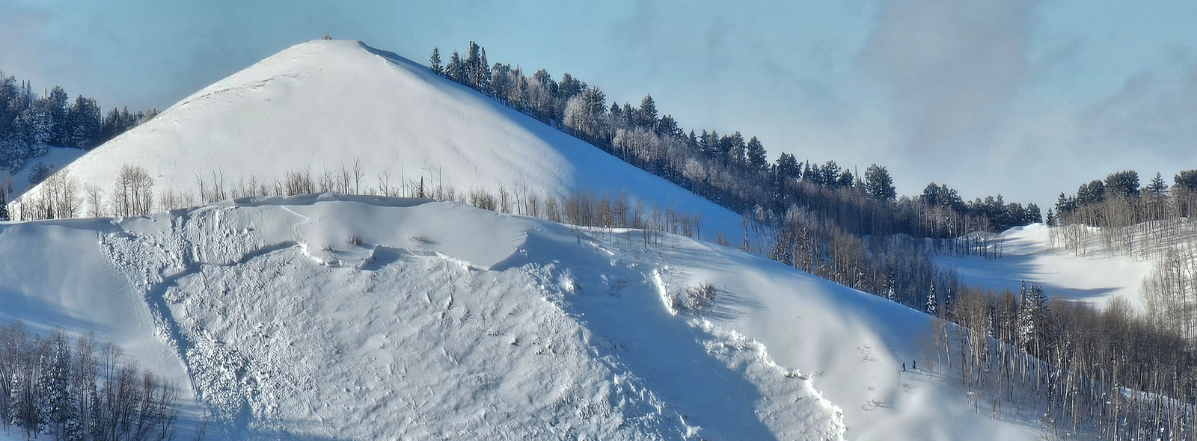
It's been more than a week since a large snowmobile-triggered avalanche occurred on the East Face of Laurel Peak in Dark Canyon. Although the odds are decreasing, this type of avalanche remains possible. See the report here.
Click here for the complete avalanche database.
Avalanche Problem #1
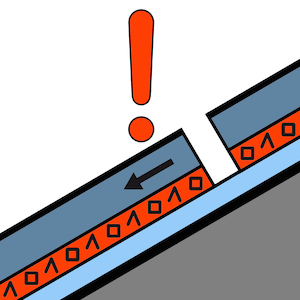
Persistent Weak Layer
Type
Location
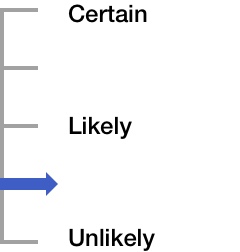
Likelihood
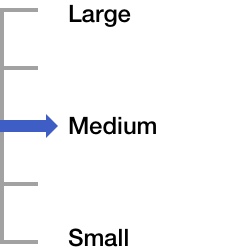
Size
Description

The snowpack still has a poor structure and has proven it can produce large and destructive human-triggered avalanches. While the likelihood of triggering one is decreasing, the consequences remain high. Any avalanche failing on this persistent weak layer would likely break to the ground, taking out the entire season’s snowpack, and could result in a season-ending injury—or worse. This is a classic persistent weak layer problem. It’s not going away on its own, and it will take a substantial amount of new snow to ever put it to bed.

The weak layer of concern sits just below the Christmas rain crust. In some areas, this crust may feel supportive under your skis or board, but its ability to bridge the weak snow below is highly variable and unreliable. Don’t let a lack of obvious red flags lull you into a false sense of security.

If you’re traveling in avalanche terrain, start with small, low-consequence features. Avoid steep convexities, terrain traps, thin rocky areas, and slab margins. The most effective way to manage this problem is to avoid it entirely by sticking to slopes less than 30 degrees

Additional Information
General Announcements
This forecast is from the U.S.D.A. Forest Service, which is solely responsible for its content. This forecast describes general avalanche conditions and local variations always occur.