*** For your reading pleasure, check out a new blog post by UAC Forecaster, Drew Hardesty, "Utah – The Greatest...*Rain* on Earth?!?" and this from UAC Director Paige Pagnucco - Weak Snow: Today’s Surface, Tomorrow’s Avalanche Problem
Skies will be mostly sunny again today with high temperatures at 8500 feet near 40°F. Light to moderate winds will blow from the northwest. Under a strong high-pressure system, we can expect persistent fair and mild conditions in the mountains through the remainder of the week and the weekend. Thankfully, a change in the weather is likely next week. Forecasters from the National Weather Service report, "a cooler and more unsettled pattern will develop by early next week as a series of storm systems impact the area, with snow becoming likely, at least for Utah's mountains."
This morning at the UAC Card Canyon weather station at 8700 feet, it's 29°F, and there is 41 inches of total snow. The Tony Grove Snotel at 8400 feet reports 30°F and 54 inches of total snow. On the summit of Logan Peak (9700 feet), the wind is blowing 15 to 24 mph from the north-northwest. It's 29°F on Paris Peak at 9500 feet, and the wind is blowing 16 to 22 mph from the north.
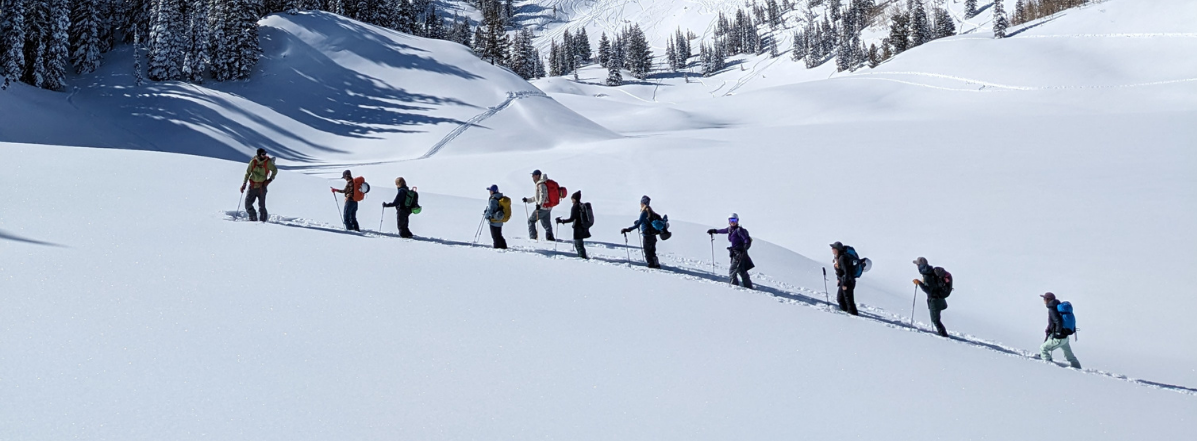
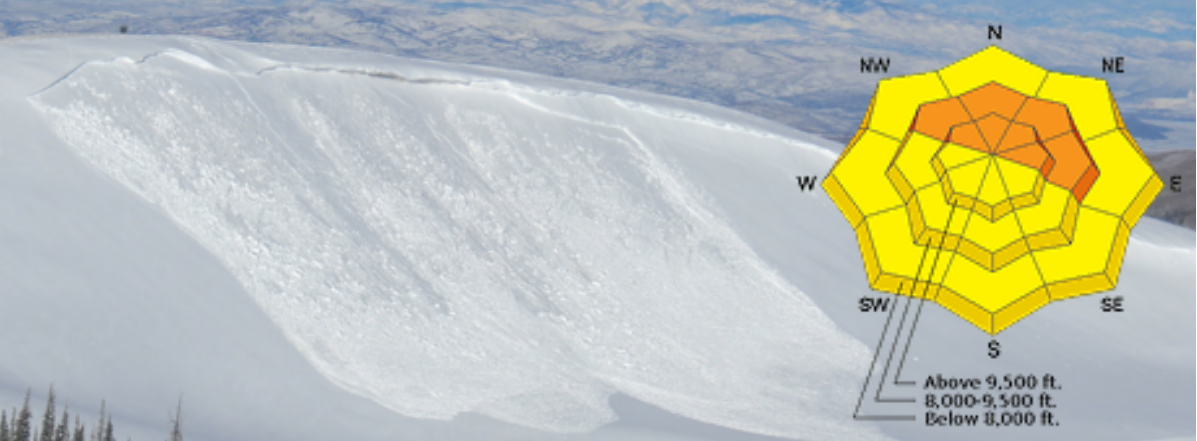
We've found nice, fast, soft, and somewhat powder-like riding in sheltered terrain, with the best conditions on low-angled slopes and in the trees. On slopes exposed to the elements, you'll find a wide variety of surface conditions. On some upper elevation slopes, drifts of redeposited snow formed on slopes with preexisting weak surface snow. Stiff wind slabs that a person might trigger can be found near ridge tops and in and around terrain features like sub-ridges, gully walls, cliff bands, and mid-slope rollovers. Small loose avalanches are also possible on very steep slopes, entraining wet snow in sunny terrain, and sugary, faceted snow in shady or northerly terrain. The snow cover is quite thin at lower elevations, and conditions are favorable for wildlife this winter, with sunny slopes below about 7000 feet in elevation completely bare of snow.
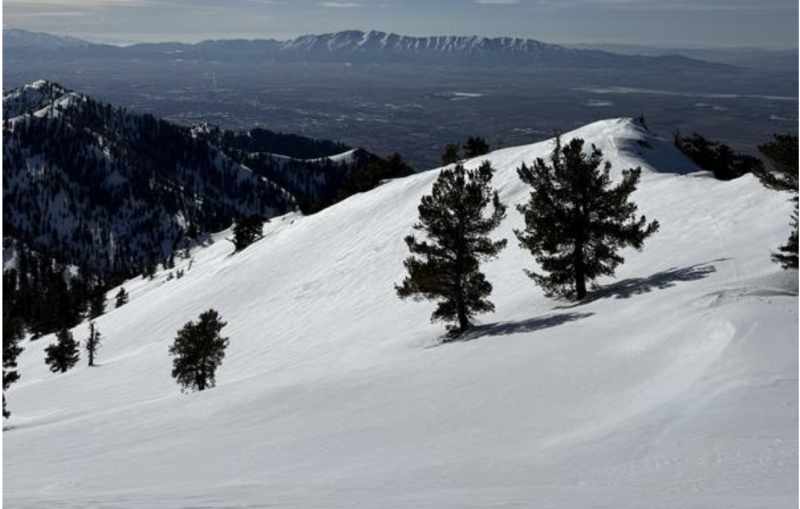
Snow conditions in the mountains above Cache Valley on Feb 3, (Richie Schumacher)
No significant avalanches have been reported recently. For all observations and avalanche activity in the Logan Zone, go HERE