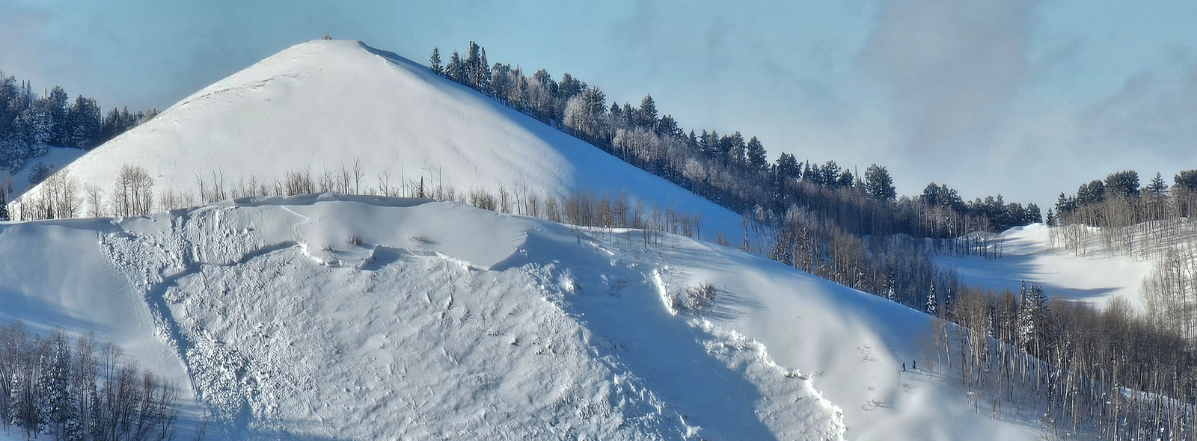
Forecast for the Logan Area Mountains

Toby Weed
Issued by Toby Weed on
Wednesday morning, February 18, 2026

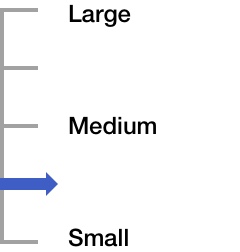
There is HIGH avalanche danger today, with drifted storm snow overloading a widespread layer of weak faceted snow on many slopes. Very dangerous avalanche conditions exist in drifted upper and mid-elevation terrain. Natural and human-triggered avalanches are likely. Heavy snowfall and strong winds will further increase the avalanche danger in the backcountry.

Avoid travel in avalanche terrain; stay clear of avalanche runouts and off of and well out from under slopes steeper than 30°.

Low
Moderate
Considerable
High
Extreme
Learn how to read the forecast here
Avalanche Warning

What: The avalanche danger for the warning area is HIGH today.

Where: The mountains of Northern, Central, and Southwestern Utah, as well as Southeastern Idaho

Impacts: Recent heavy snow combined with strong wind is creating widespread areas of unstable snow. Both human-triggered and natural avalanches are likely. Avalanches will increase in size and likelihood throughout the day.

What to do: Avoid all avalanche terrain. Stay off of and out from under slopes steeper than 30°. Carry and know how to use avalanche rescue equipment. Find safer riding conditions on slopes less than 30° with no overhead hazard

Warning Times: Wednesday, 2/18/26 at 6:00 AM MST through 6:00 AM MST Thursday, 2/19/26

Weather and Snow

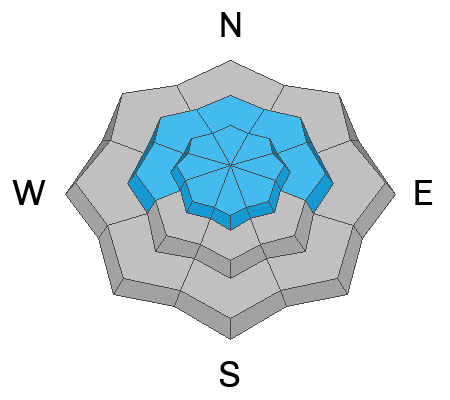
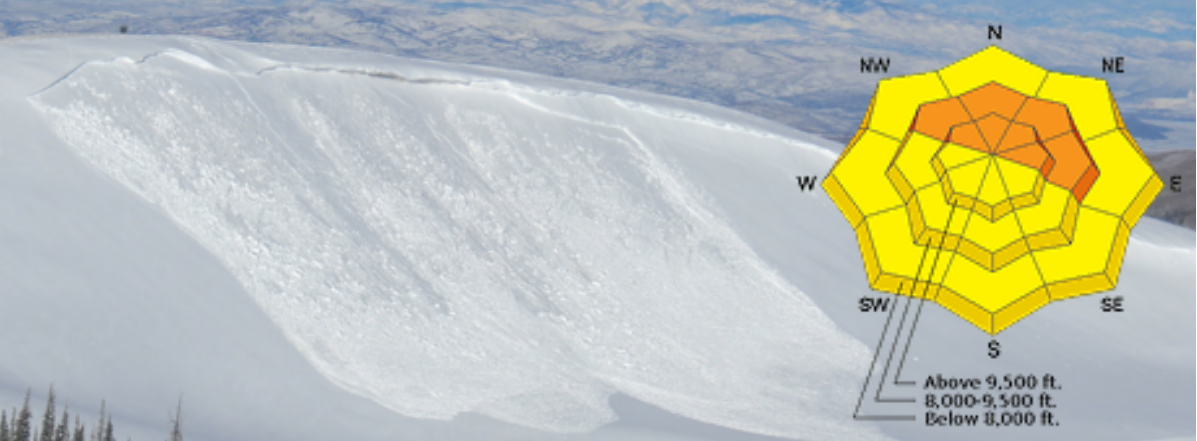
Today, a powerful winter storm will continue to elevate avalanche danger in drifted upper and mid-elevation terrain, especially on northerly facing slopes that are steeper than 30 degrees. Thick slabs of wind-drifted snow are rapidly building in lee areas of exposed ridgelines and in and around terrain features, such as gullies and rock bands. Monday, before snow started falling, terrain below about 7000 feet had only very shallow, if any, snow cover, with muddy access trails, dry trailhead parking lots, and sunny slopes facing southeast through west completely bare of snow.

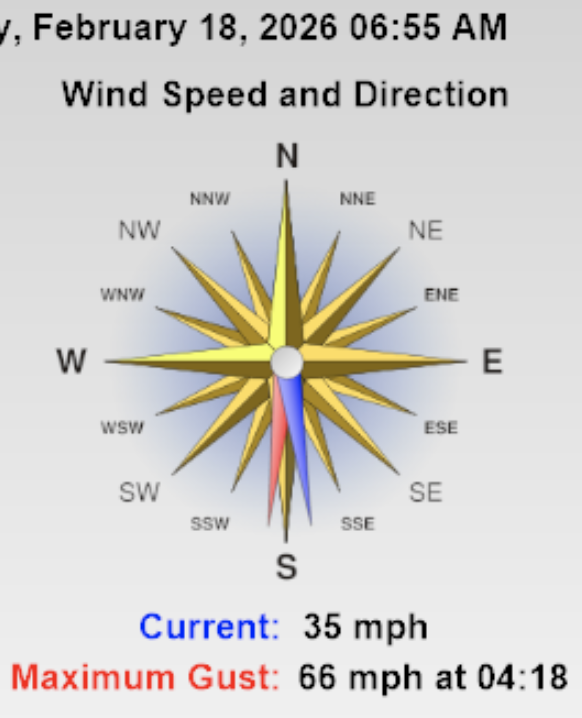
Currently, winds on Logan Peak are blowing from the southwest around 35 mph, with a gust of 66 mph recorded early this morning. It's 16°F on Paris Peak at 9500 feet, and the wind is much calmer, blowing 5 to 13 mph from the south. At 8700 feet, the UAC Card Canyon station reports 16°F and about 10 inches of new snow, and there's 52 inches of total snow. The Tony Grove Snotel, located at 8400 feet, reports 23°F, and 18 inches of new snow with 2.3 inches of SWE, and 69 inches of total snow.

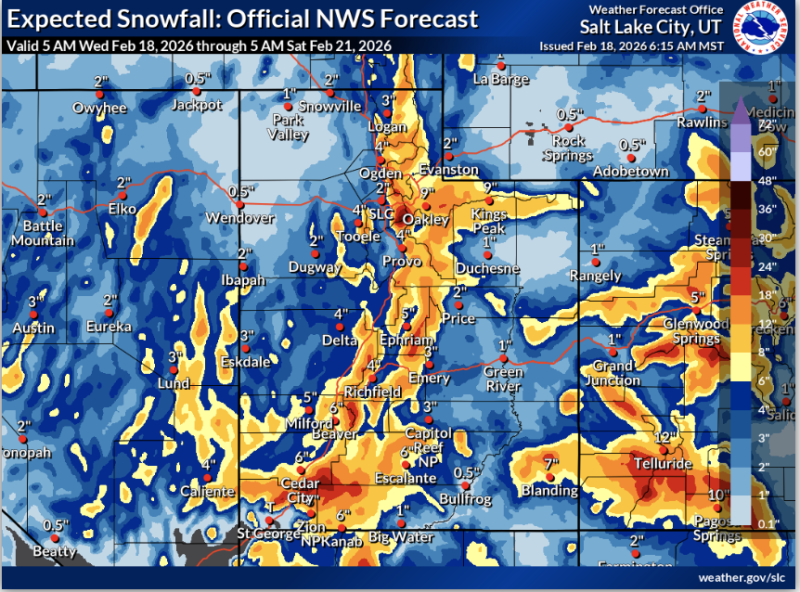
The National Weather Service has continued a Winter Storm Warning for the mountains in the Logan Zone, through early Thursday morning. We can expect heavy snowfall in the mountains today, with 8 to 12 inches of accumulation possible. High temperatures at 8500 feet will be around 22°F, dropping into the teens during the day. Strong and gusty winds from the south-southwest are expected throughout the day. Unsettled weather conditions and periods with snow showers will continue through the week, with clearing likely over the weekend.

This map from the National Weather Service shows expected snowfall for the next few days...
Recent Avalanches

No new avalanches were reported yet...Yesterday, near Tony Grove Lake, we triggered a sizable whumpf in thick drifted snow on a lower-angled slope near the ridgetop, on a northeast-facing slope at 8900 feet in elevation. We also initiated several localized shooting cracks and received an in-person report from a group of riders about others. See report

For all observations and avalanche activity in the Logan zone, go HERE

Avalanche Problem #1
Wind Drifted Snow
Type
Location
Likelihood
Size
Description

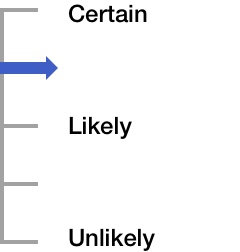
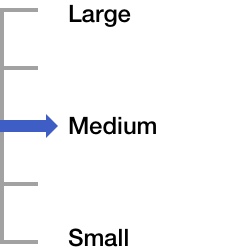
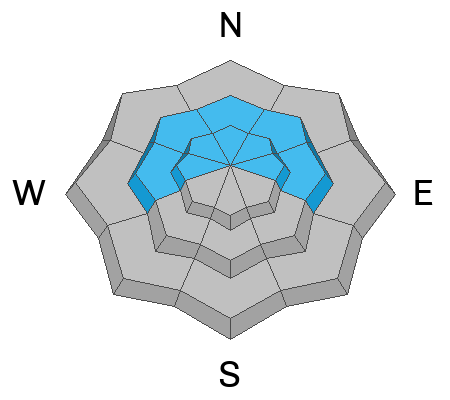
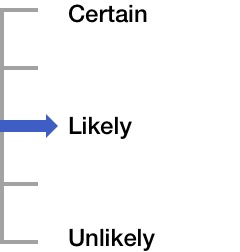
Avalanches of wind-drifted snow are likely in and around exposed terrain features in upper elevation terrain, particularly on northerly facing slopes.

  • Slabs of wind-drifted new snow will form in and around terrain features like sub-ridges, rock outcroppings, gullies, and mid-slope rollovers.
  • Wind slabs of stiffer, drifted snow are rounded and smooth-looking, and they often sound hollow, like a drum.
  • Beware if you cause cracking in stiffer drifted snow. Shooting cracks and whumpfing are obvious signs of instability.
  • Avalanches could be triggered remotely, (from a distance or from below)

Avalanche Problem #2
Persistent Weak Layer
Type
Location
Likelihood
Size
Description

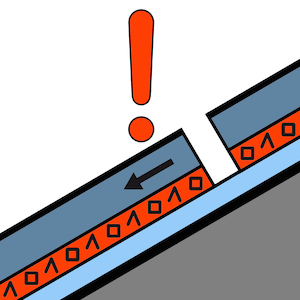
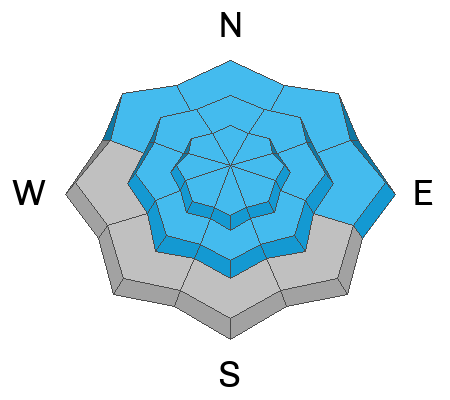
The avalanche danger has risen significantly in mid and upper-elevation terrain in the backcountry as preexisting layers of very weak snow are overloaded by heavy storm snow and drifting... Paige explains how different types of weak snow that develop during periods of benign weather can become persistent weak layers when buried by future snows. We expect dangerous avalanche conditions to develop as persistent weak layers are overloaded by heavy snow this week.

Avalanche Problem #3
New Snow
Type
Location
Likelihood
Size
Description

Although much low-elevation terrain was bare of snow on Monday, as snow rapidly stacks up on higher slopes, it is likely to become unstable. Whether or not avalanches fail on pre-existing weak layers or layers that develop within the snow becomes irrelevant at some point.

  • Natural avalanches of storm snow are most likely during periods of exceptionally heavy snowfall.
  • Small loose or soft slab avalanches of new snow could overload slopes with buried persistent weak layers and cause a much larger avalanche.
  • Even small avalanches can be quite dangerous if you are carried into trees or other terrain traps below.
Additional Information
  • Travel with a partner, and cross or ride slopes steeper than 30 degrees one at a time while the rest of your group watches from a safe spot.
  • Ensure that everyone in the group has avalanche rescue equipment (a transceiver, probe, and shovel) and knows how to use it.

-----------------------------------------------------------------------------------------------------------------------------------------------------------------

Join the UAC for the first "Stay and Play Avalanche Course" at Bear River Lodge in the Uintas, March 19th-22nd. This course is designed for snowmobilers by snowmobilers, where you will learn avalanche rescue, riding skills, and how to survive in the backcountry. Come enjoy all the luxury offerings at Bear River Lodge and improve your skills along the way.

For all questions on forecasts, education, Know Before You Go, events, online purchases, or fundraising, call 801-365-5522.

Did you know the UAC hosts a podcast? Episode 2 of Season IX is just out - AI, Machine Learning, and the Value of Expert Intuition at the Utah Avalanche Center.

Are you interested in learning more about avalanches? Visit our education page for details on all our classes.

For more information, visit the UAC weather page here: UAC Weather Page For Logan-specific weather, go here: Logan Mountain Weather

-Remember, the information you provide could save lives, especially if you see or trigger an avalanche. To report an avalanche or submit an observation from the backcountry, go HERE

-Receive forecast region-specific text message alerts to receive messages about changing avalanche conditions, watches, and warnings. Sign up and update your preferences HERE

This forecast is from the U.S.D.A. Forest Service, which is solely responsible for its content. This forecast describes general avalanche conditions and local variations always occur.

General Announcements
This information does not apply to developed ski areas or highways where avalanche control is normally done. This forecast is from the U.S.D.A. Forest Service, which is solely responsible for its content. This forecast describes general avalanche conditions and local variations always occur.