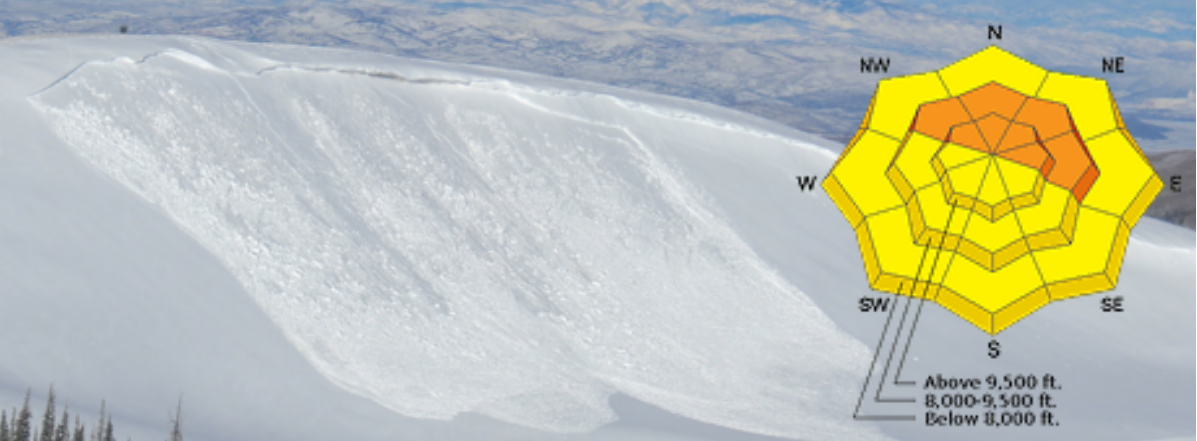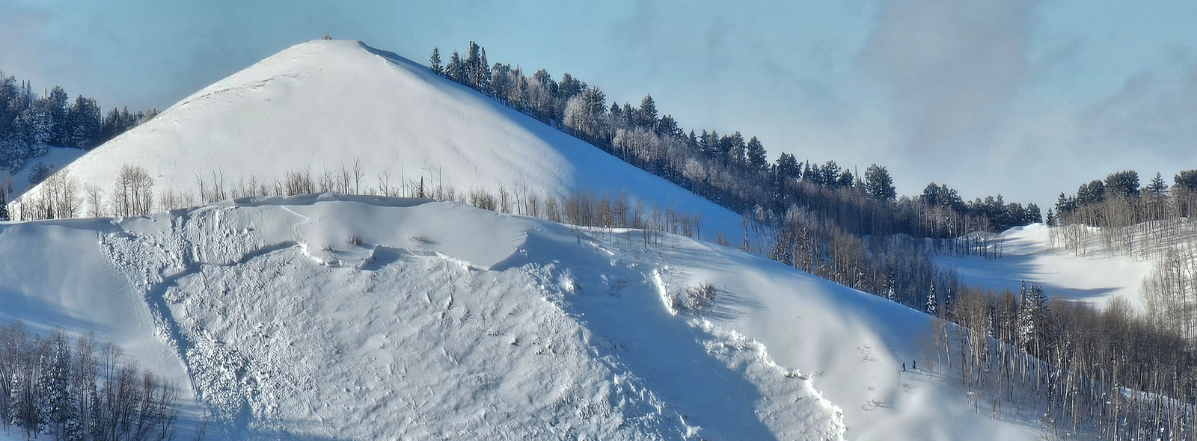

Our snowpit was ~75 meters from the avalanche flank at an even elevation with the crown. Due to wind loading and increasing slope angle, we were not able to get a crown profile or a pit location that was representative of the avalanche starting zone. We could see from our pit location that this avalanche was a soft wind slab that failed on the new snow/wind slab interface.
We did not have either buried surface hoar or near surface facets in our snow pit.

We were teaching an on-snow avalanche awareness class for the Davis County Snowmobile Club. When we approached the small rise between Whiskey and Beer Hills to discuss terrain with the group, we witnessed a snowmobiler ascend directly up the middle of Whiskey Hill and trigger a wind slab avalanche as soon as he approached the wind-loaded upper section of the slope. The rider luckily rode off the slide and was not caught. This was especially lucky since he was not carrying a transceiver, probe, or shovel. Note that this rider was not part of our class. On January 8, a snowpit was dug just north of the base of this slope.
This was a great learning opportunity to discuss with the class terrain. Beer Hill just to the north (the site of a 2025 avalanche fatality) got ridden hard and did not slide.
Photo 1 is a photo of the avalanche from where we watched it.
Photo 2 is the same photo annotated.
Photo 3 shows the crown and a small area the slide stepped down from our snow pit location.
Photo 4 shows the debris.
Photo 5 shows the extensive tracks on Beer Hill with the Whiskey Hill avalanche in the background.