
Observer Name
Rhodes
Observation Date
Sunday, April 26, 2026
Avalanche Date
Sunday, April 26, 2026
Region
Salt Lake » Little Cottonwood Canyon » White Pine » Lake Peak
Location Name or Route
Boulder Basin/Lake Peak Ridgline
Elevation
10,300'
Aspect
North
Trigger
Skier
Trigger: additional info
Unintentionally Triggered
Avalanche Type
Soft Slab
Avalanche Problem
New Snow
Weak Layer
New Snow/Old Snow Interface
Depth
12"
Width
1,000'
Comments
Partner and I learned some good lessons today.
We started the morning with the objective of Lake Peak with the plan to ski some of the north facing lines. We had discussed the likely snow problems of new snow and wind loading. On the ascent we had noted little instability, no shooting cracks, and hand pits seemed to indicate the new snow was bonding well with the old snow. This changed when we were in Boulder Basin. My partner had noted shooting cracks while putting in the skin track (around 10k). We started up the sub ridge, which is under the north ridge of Lake Peak. My partner triggered a small avalanche in front of his skis while skinning. This was approximately 50 feet wide and 8 inches deep. We had a discussion about turning around, ascending to the ridge but coming back down directly, or continuing to our previous discussed objectives. We opted to ascend to the ridge, but not pursue our original objectives: the steeper more consequential lines. On the way up, there was a back and forth between us about aborting and getting out of there because we both started to feel that the snow had become more unstable. However, we decided to grab the ridge and then carefully descend. At the top of the ridge, we had another discussion about the safest way we should descend. The wind was ripping and visibility had decreased, so we ultimately decided to transition and ski down the sub ridge rather than boot back down the way we had just booted up. Three turns into Partner 1’s descent, the slope failed on the old snow new snow interface. Thankfully, it failed immediately around him and he was able to stop and let the slide go beneath him. We both descended on the bed surface. We did a brief beacon search and noted no other tracks into the runout zone. As we exited down, we noted that the snow instability seemed to be above 10k feet.
Key take aways:
We ignored multiple red flags: shooting cracks, steep terrain, wind loading, and the initial we triggered.
We could have turned around at any point on the booter.
Once on the ridge, we could have walked back down our booter.While not the best option, it was our safer option than descending with skis on and triggering the larger avalanche.
We had the powder fever that blinded us. We had walked/skinned 2-3 hours and didn’t want to go home without some good turns. So we went up to the ridgeline instead of turning around after the first avalanche.
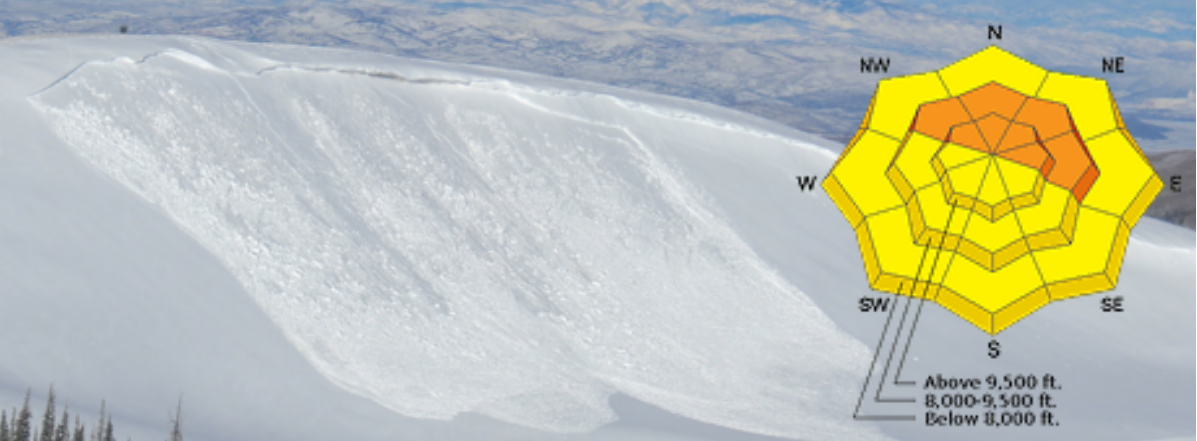
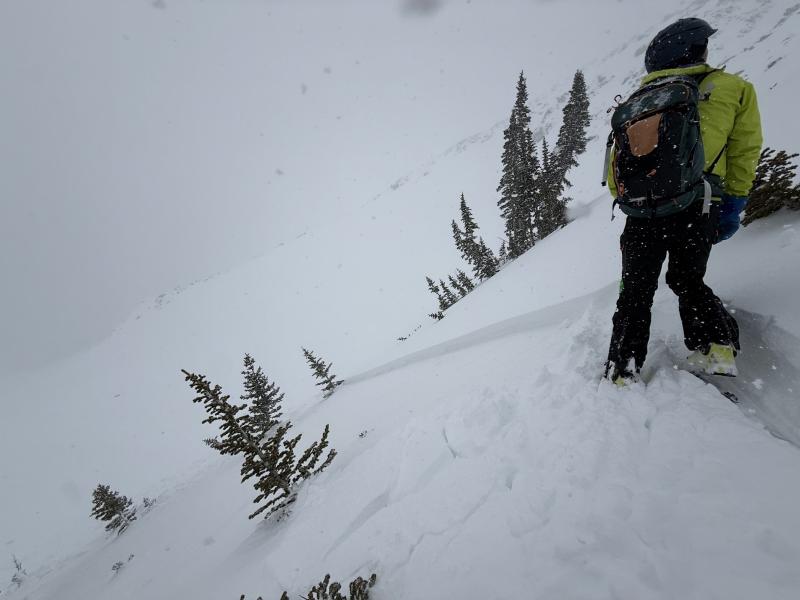
Picture 1 with skier: small 50 ft wide slide.
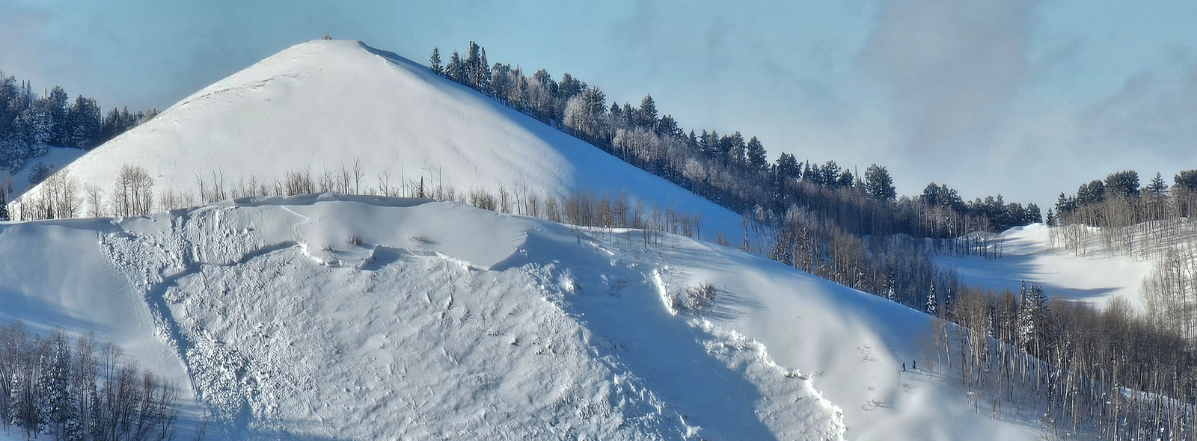
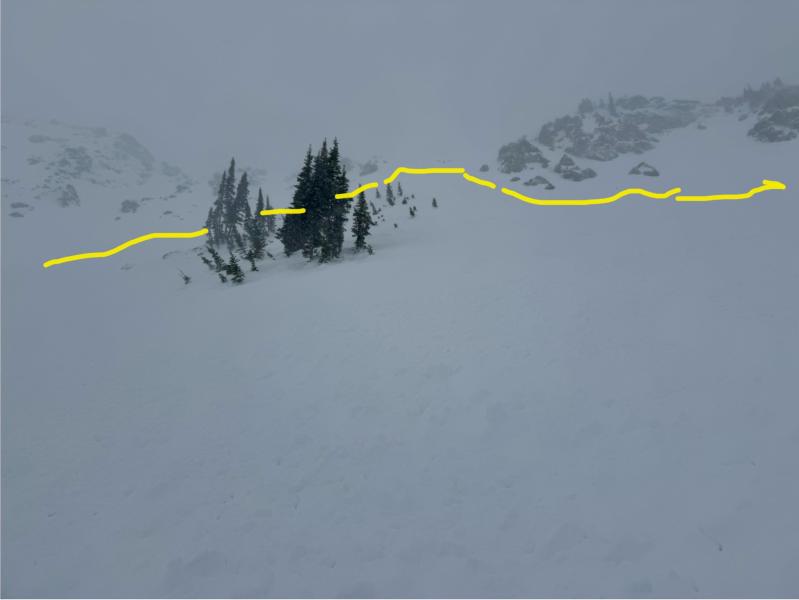
Second picture: second slide.
Coordinates