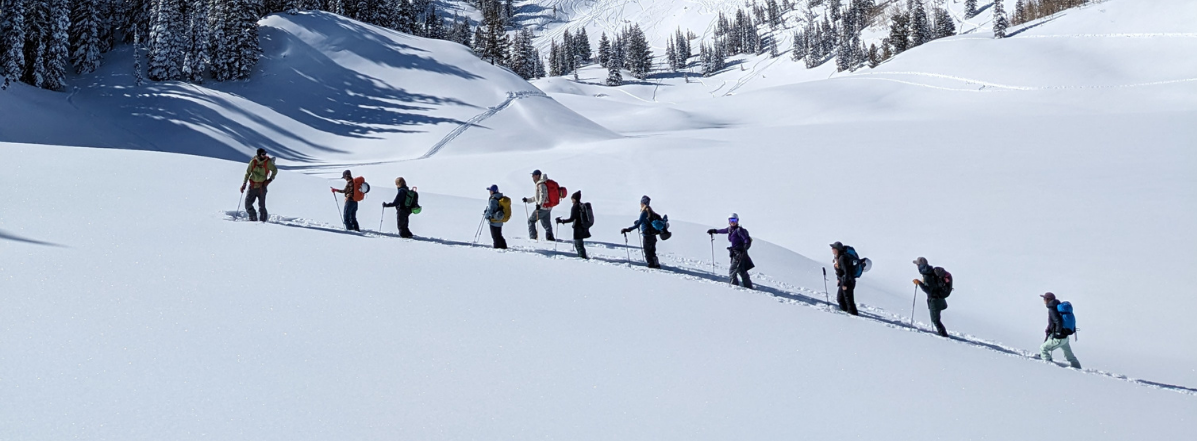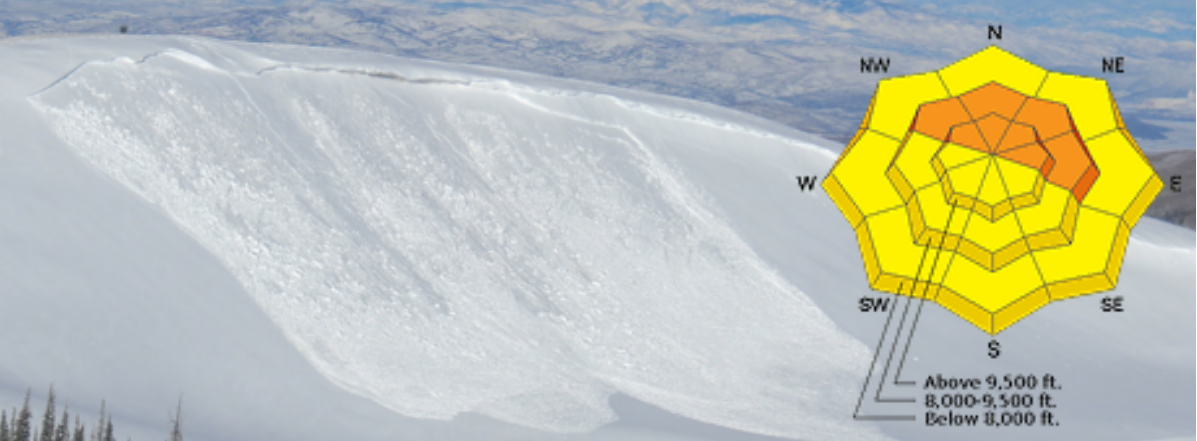

We left White Pine Trailhead with a plan to ski west-facing terrain in the Tri Chutes area. Prior to and during the tour, we discussed recent conditions: the significant temperature drop on Thursday, a wet old snow/new snow interface, and the avalanche forecast calling for wind loading on north through east to south aspects.
As we climbed toward Tri Chutes, we observed signs of wind loading from the southeast. This was unexpected and we discussed that it could impact Tri Chutes. On the ridge itself, however, we did not feel strong wind loading and we did not feel wind loading from the SE wind. Upon returning home I checked the Hidden Peak weather station and it was not reporting SE winds, suggesting a possible localized orographic effect.
We skied three runs in Tri Chutes with good snow quality. During these runs, we observed small, slow-moving soft slab avalanches within the storm snow, failing on a density change associated with the Thursday temperature drop. These were manageable but notable, and we discussed them.
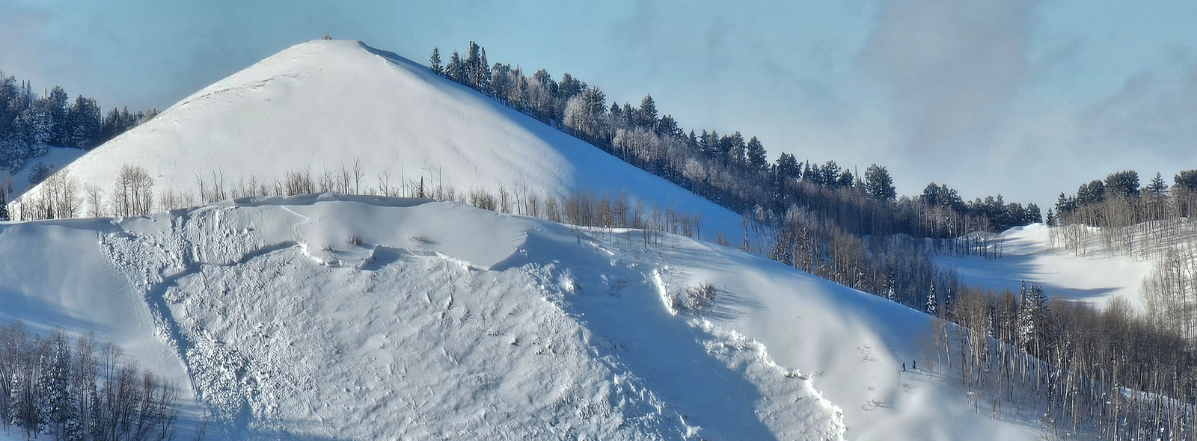
Despite our original plan to stick to west-facing terrain, we decided to exit via Birthday Chutes. Visibility began to deteriorate significantly around 11:00 AM. On earlier climbs, we had noted a sizable recent avalanche in skier’s left Birthday Chute, which appeared to have run sometime on April 2 based on minimal new snow covering the debris.
Due to poor visibility, we chose to start our exit run lower on the slope (~10,600’) and ski the bed surface of the previous avalanche, using the trees on skier’s right for reference and depth perception in the poor visibility. The bed surface had 4–6 inches of new snow, but the old/new snow interface underneath was wet and unsupportable.
After a few turns, I decided to traverse back toward the ridge where my partner was positioned. As soon as I moved off the bed surface, I triggered a 12–16 inch deep soft wind slab approximately 20 feet above me. The slab was very dense. As I attempted to ski off it, my feet were pulled out from under me.
I was caught on the right side of the avalanche, facing left. It took a significant amount of strength to turn around and try to move toward the right flank. The avalanche moved slowly, which allowed me time to fight my way to the right and eventually off the moving snow. I was carried approximately 200 vertical feet before exiting the moving debris. The avalanche continued another ~200 feet before stopping.
This was a slow-moving avalanche, but the snow was very dense and difficult to move through. Had the avalanche been faster, I likely would not have been able to escape.
My partner maintained visual contact from the ascent ridge and was prepared to respond, descending while keeping me in sight.
In the process of regaining control on the debris, I injured my left knee but was able to carefully ski out to the trailhead.
Due to limited visibility, we were unable to document the avalanche with photos.
Lessons Learned
- We had a clear plan to avoid wind-loaded aspects and stick to west-facing terrain, but did not adhere to that plan on the exit run.
- Our original plan was based on stronger evidence (avalanche forecast, weather station data, prior conditions) than the observations we used to justify changing it.
- Poor visibility reduced our ability to assess terrain and conditions and should have pushed us toward even more conservative choices.
We left White Pine Trailhead with a plan to ski west-facing terrain in the Tri Chutes area. Prior to and during the tour, we discussed recent conditions: the significant temperature drop on Thursday, a wet old snow/new snow interface, and the avalanche forecast calling for wind loading on north through east to south aspects.
As we climbed toward Tri Chutes, we observed signs of wind loading from the southeast. This was unexpected and we discussed that it could impact Tri Chutes. On the ridge itself, however, we did not feel strong wind loading and we did not feel wind loading from the SE wind. Upon returning home I checked the Hidden Peak weather station and it was not reporting SE winds, suggesting a possible localized orographic effect.
We skied three runs in Tri Chutes with good snow quality. During these runs, we observed small, slow-moving soft slab avalanches within the storm snow, failing on a density change associated with the Thursday temperature drop. These were manageable but notable, and we discussed them.
Despite our original plan to stick to west-facing terrain, we decided to exit via Birthday Chutes. Visibility began to deteriorate significantly around 11:00 AM. On earlier climbs, we had noted a sizable recent avalanche in skier’s left Birthday Chute, which appeared to have run sometime on April 2 based on minimal new snow covering the debris.
Due to poor visibility, we chose to start our exit run lower on the slope (~10,600’) and ski the bed surface of the previous avalanche, using the trees on skier’s right for reference and depth perception in the poor visibility. The bed surface had 4–6 inches of new snow, but the old/new snow interface underneath was wet and unsupportable.
After a few turns, I decided to traverse back toward the ridge where my partner was positioned. As soon as I moved off the bed surface, I triggered a 12–16 inch deep soft wind slab approximately 20 feet above me. The slab was very dense. As I attempted to ski off it, my feet were pulled out from under me.
I was caught on the right side of the avalanche, facing left. It took a significant amount of strength to turn around and try to move toward the right flank. The avalanche moved slowly, which allowed me time to fight my way to the right and eventually off the moving snow. I was carried approximately 200 vertical feet before exiting the moving debris. The avalanche continued another ~200 feet before stopping.
This was a slow-moving avalanche, but the snow was very dense and difficult to move through. Had the avalanche been faster, I likely would not have been able to escape.
My partner maintained visual contact from the ascent ridge and was prepared to respond, descending while keeping me in sight.
In the process of regaining control on the debris, I injured my left knee but was able to carefully ski out to the trailhead.
Due to limited visibility, we were unable to document the avalanche with photos.
Lessons Learned
- We had a clear plan to avoid wind-loaded aspects and stick to west-facing terrain, but did not adhere to that plan on the exit run.
- Our original plan was based on stronger evidence (avalanche forecast, weather station data, prior conditions) than the observations we used to justify changing it.
- Poor visibility reduced our ability to assess terrain and conditions and should have pushed us toward even more conservative choices.