Forecast for the Provo Area Mountains

Nikki Champion
Issued by Nikki Champion on
Thursday morning, February 19, 2026

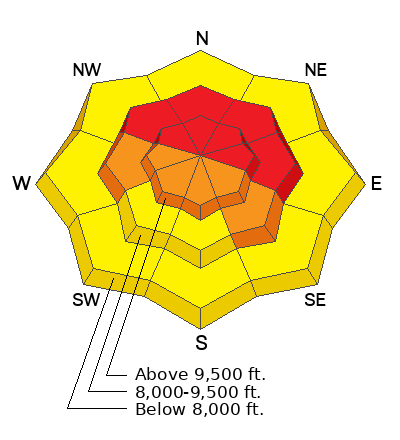
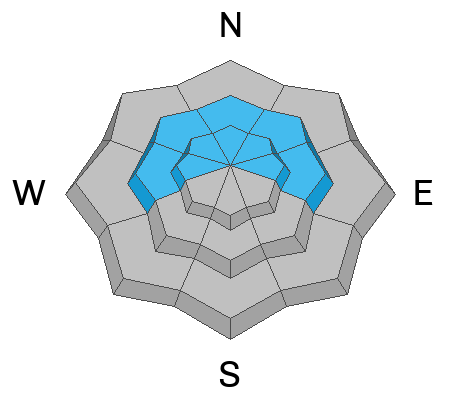
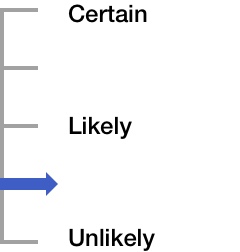
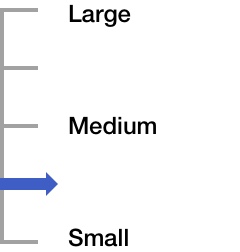
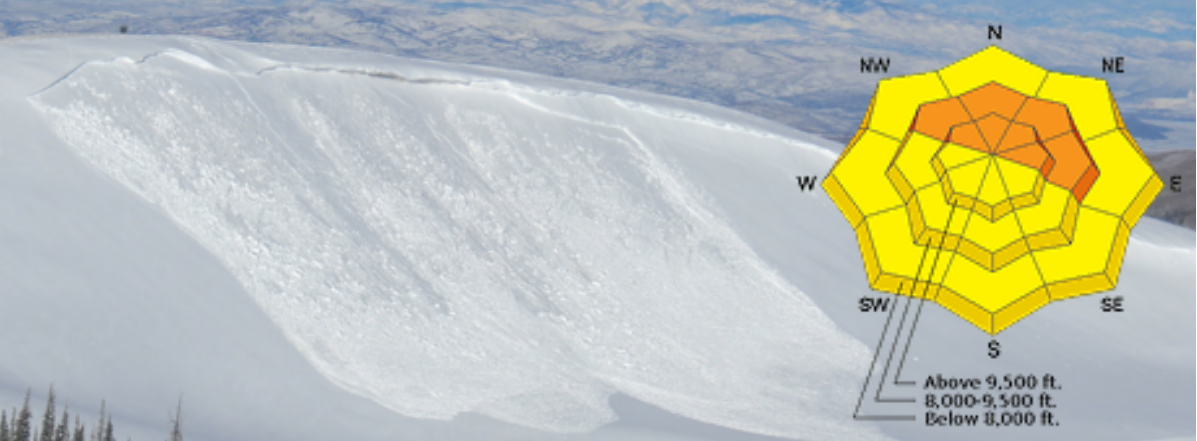
The avalanche danger is HIGH on upper and mid-elevation slopes facing northwest through north and east. New snowfall and strong winds have created very dangerous conditions. Avalanches triggered in wind-drifted or new snow could step down more than 3 feet into weak-faceted snow, producing large, dangerous, and potentially deadly slides. Both natural and human-triggered avalanches are likely.

With clearer weather, backcountry riders may be tempted by these appealing conditions, but avalanche danger remains high. Most avalanche accidents occur after peak instability. Fortunately, avalanche terrain can be easily avoided, and excellent riding is available on lower-angled slopes. Remember, once you leave a ski resort boundary, you are entering backcountry terrain.

What to do today:

  • Stick to slopes less than 30 degrees
  • Stay well away from slopes connected to or below anything steeper than 30 degrees
Low
Moderate
Considerable
High
Extreme
Learn how to read the forecast here
Avalanche Warning
What: The avalanche danger for the warning area is HIGH today.
Where: The mountains of northern, central, southwestern, and southeastern Utah, including the Abajo Range, as well as southeastern Idaho.
Impacts: Recent heavy snow combined with strong wind has created widespread areas of unstable snow. Both human-triggered and natural avalanches are likely.
What to do: Avoid all avalanche terrain. Stay off of and out from under slopes steeper than 30°. Carry and know how to use avalanche rescue equipment. Find safer riding conditions on slopes less than 30° with no overhead hazard
Warning Times: Thursday, 2/19/26 at 6:00 AM MST through 6:00 AM MST Friday, 2/20/26
Special Announcements

Avalanche Warning vs. Watch: The UAC upgraded our Avalanche WATCH to our first Avalanche WARNING of the season today. An Avalanche WARNING, the most severe avalanche alert product we have, is issued when large avalanches are certain or very likely in many areas and when unusually dangerous avalanche conditions exist. More info on each of these from Bruce Tremper and Drew Hardesty HERE.

Weather and Snow

Since Monday evening, an impressive series of storms has moved through the state. The strong southwest flow favored parts of the Provo area, including the Timpanogos Divide and Provo Canyon. When the flow shifted more northwesterly, it didn’t do much for the Provo area mountains, but a bit more precipitation did make its way through, adding roughly 5 inches. Final storm totals as of this morning are:

  • Timpanogos Divide: up to 19 inches of snow // 2.86" H2O

  • Sundance: up to 9 inches of snow // 1.64" H2O

Today, the storm has moved out, leaving a few light showers with little accumulation. Snowfall should stay under an inch during the day. Temperatures will climb into the upper teens to low 20s, with southwesterly winds blowing 10 to 15 mph along most upper-elevation ridgelines, gusting to 25 mph and up to 35 mph at the highest peaks.

Another system arrives this evening, mainly impacting central and southern Utah, with northern Utah on the edge and likely seeing lower totals. Snow should begin between 6 and 10 pm, with the best chance for steadier snowfall Friday afternoon before drying out Friday night. This flow could dip south of the central Wasatch, but the southwest flow could bring another decent hit to the Provo area mountains.

Recent Avalanches

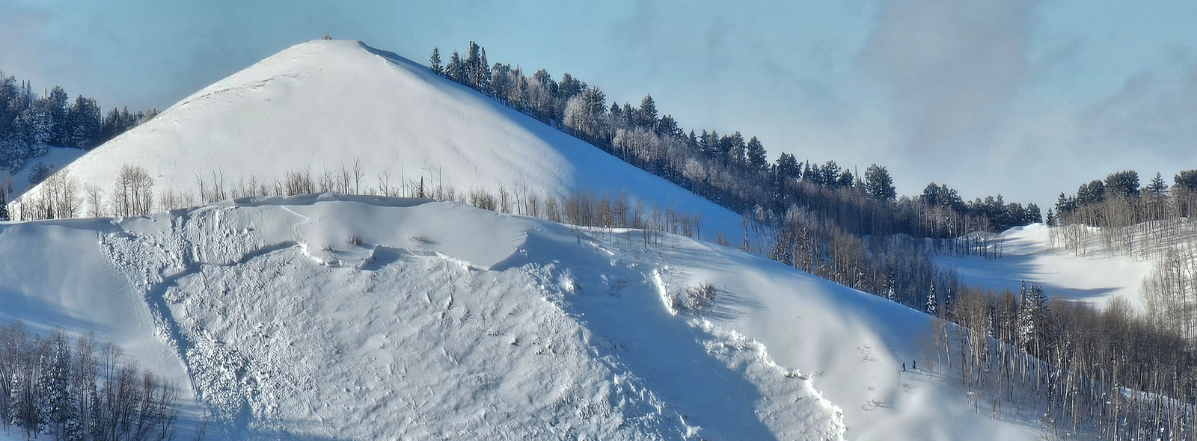
In the Provo area mountains, heavy snow with moderate southwest winds created dense, fast snow and early wind slabs on southeast aspects. Slab avalanches in UFO Bowls 4 and 5 were remotely triggered from a brushy meadow below, propagating 600’ up to the ridge and along the ridge for roughly 1,000’, with very touchy conditions.

Just north of the Provo area mountains in the SLC region, yesterday saw very unstable backcountry conditions, with widespread soft slab avalanches 20 inches to 3 feet deep reported on north through southeast-facing slopes between 8,200 and 10,000 feet. Travel was hazardous, including a close call near Nutty Putty where one party was partially and fully buried but fortunately uninjured.

You can view all recent observations here.

Avalanche Problem #1
Wind Drifted Snow
Type
Location
Likelihood
Size
Description

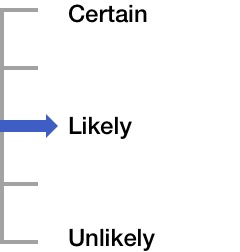
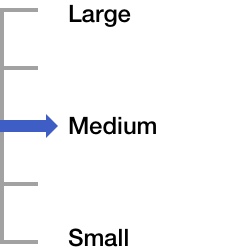
The winds have been moderate to strong over the past few days. Combined with up to 20 inches of new snow now available for transport, these winds have formed and will continue to form slabs of wind-drifted snow on upper- and mid-elevation slopes. Slopes facing SE through N to NW are particularly susceptible. These slabs are most common near ridgelines and on mid-slope features such as gullies and convex rolls.

These smooth, rounded pillows of wind-drifted snow rest on the Dry January weak layer. Alone, they could catch and carry a rider, but when combined with the buried weak layers, they have the potential to trigger much larger avalanches.

Best Bet: Stick to sheltered, lower-angle terrain out of the wind. Watch for drifts, dunes, pillows, and wind-textured surfaces, as these indicate recent wind loading. If the snow beneath your feet sounds hollow, like styrofoam, this is a sign you may have found a slab.

Avalanche Problem #2
Persistent Weak Layer
Type
Location
Likelihood
Size
Description

The Dry January Layer (DJL) formed during our January dry spell can be found on upper- and mid-elevation W-N-E facing slopes. This morning, up to 20 inches of snow sits on the DJL in non-wind-loaded areas. This layer is likely responsible for much of the avalanche activity observed yesterday.

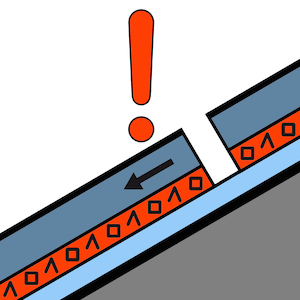
Large slabs now exist across much of the range, resting on the very weak DJL. This strong-over-weak structure is very likely to produce large, destructive avalanches that are big enough to bury and kill a person and potentially damage a vehicle. These slabs can propagate widely and may be triggered remotely from a distance. If you’re considering “safe” travel on a ridgeline, remember you could become a hazard to those below if you trigger or remotely trigger a slide on adjacent slopes, especially in busy terrain. Always be aware of who and what is above and below you. Safer riding conditions are found on slopes less than 30° with no overhead hazard.

Wind-loaded slopes mentioned above remain the most suspect.

An example of the poor snowpack structure in a meadow at 7400' off the Alpine Loop Road (E. Fullmer)

Avalanche Problem #3
New Snow
Type
Location
Likelihood
Size
Description

On wind-protected slopes and features in the areas that were favored by this storm, such as the Alpine Loop or Provo Canyon, lingering new snow instabilities are still possible today, generally appearing in two ways:

  • Storm slabs: Denser new snow may slide on top of, or into, weak old snow. Be cautious of triggering these above terrain traps such as road cuts, creeks, or gullies. Cracking along the snow surface is a sign you’ve found a slab.
  • Loose dry sluffs: Unconsolidated dry snow can run fast and far. Small sluffs can knock you off your feet, while larger ones could bury a person. They are most common on steeper slopes, especially where graupel has accumulated.
General Announcements

This information does not apply to developed ski areas or highways where avalanche control is normally done. This forecast is from the U.S.D.A. Forest Service, which is solely responsible for its content. This forecast describes general avalanche conditions and local variations always occur.