Forecast for the Logan Area Mountains

Toby Weed
Issued by Toby Weed on
Monday morning, February 9, 2026

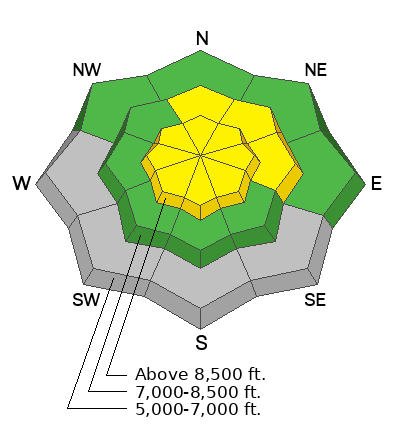
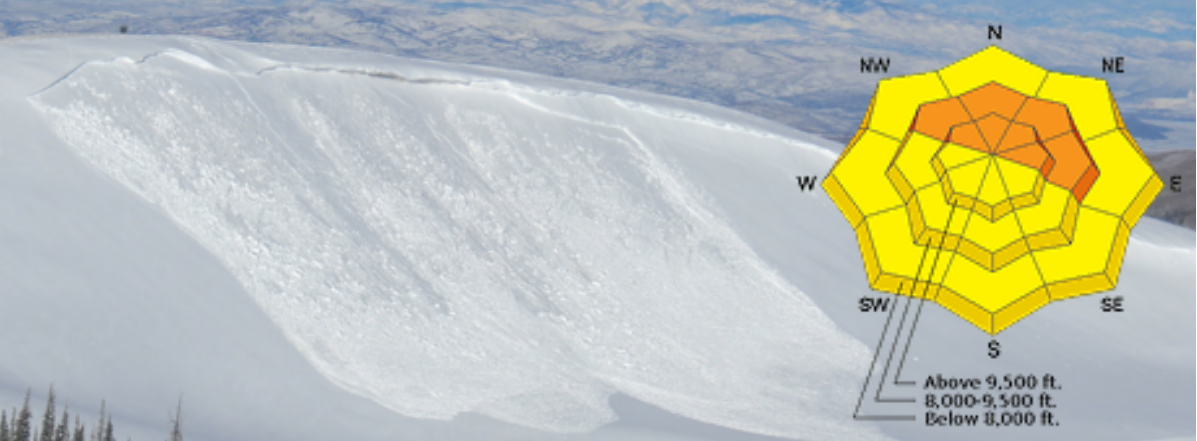
Periods of heavy snowfall and drifting by winds from the west will elevate the avalanche danger to MODERATE on drifted upper elevation slopes steeper than 30 degrees, especially in the Northern Bear River Range. People could trigger avalanches of wind drifted new snow.

Low
Moderate
Considerable
High
Extreme
Learn how to read the forecast here
Weather and Snow

Believe it or not, it is snowing in the mountains this morning! Light snow is visible on Beaver Mountain's webcams, and radar shows precipitation along the state line slowly making its way southward across the Logan Zone. The wind, which had been from the east overnight, veered from the west and increased significantly in the last hour on the summit of Logan Peak (9700 feet), and it's currently blowing 30 to 50 mph from the southwest. At 8700 feet, the UAC Card Canyon weather station reads a temperature of 33°F and 39 inches of total snow. The Tony Grove Snotel at 8400 feet reports 35°F and 51 inches of total snow. It's 25°F on Paris Peak at 9500 feet, and the wind lightened up a bit in the past hour and is now blowing from the southwest 18 to 32 mph.

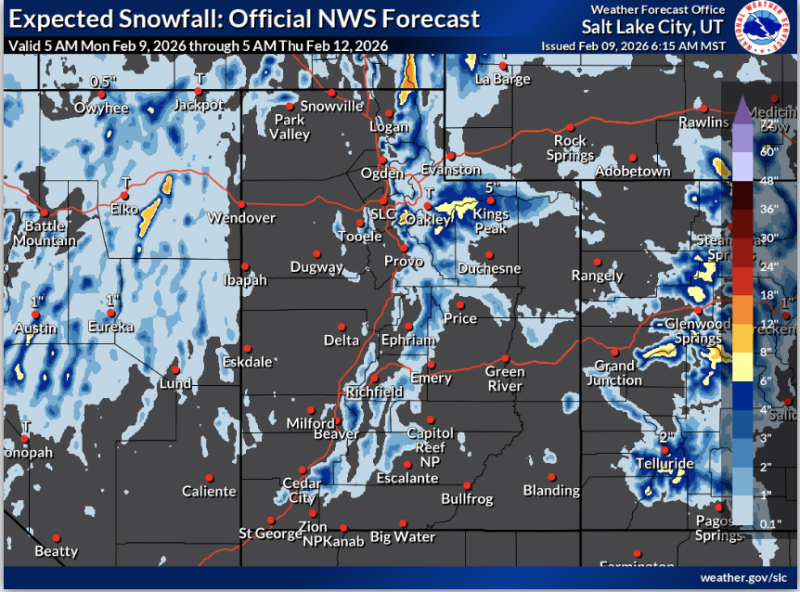
Snow will fall in the mountains today, with significantly more accumulation likely in the northern half of the Logan Zone than in the southern half. At upper elevations north of the state line, 5 to 9 inches are possible, while the Mount Logan area is expected to receive only 1 to 2 inches. The NWS point forecast for the Naomi Peak area calls for periods of heavy snow, with 2 to 4 inches of accumulation possible. The temperature at 8500 feet should drop to around 26°F, and winds from the west-northwest will be 15 to 20 mph with gusts above 30 mph... Unsettled weather continues for the week. Another decent round of snowfall is expected on Wednesday, with 4 to 8 inches possible by Thursday morning. The models show unsettled weather for the next two weeks.

Recent Avalanches

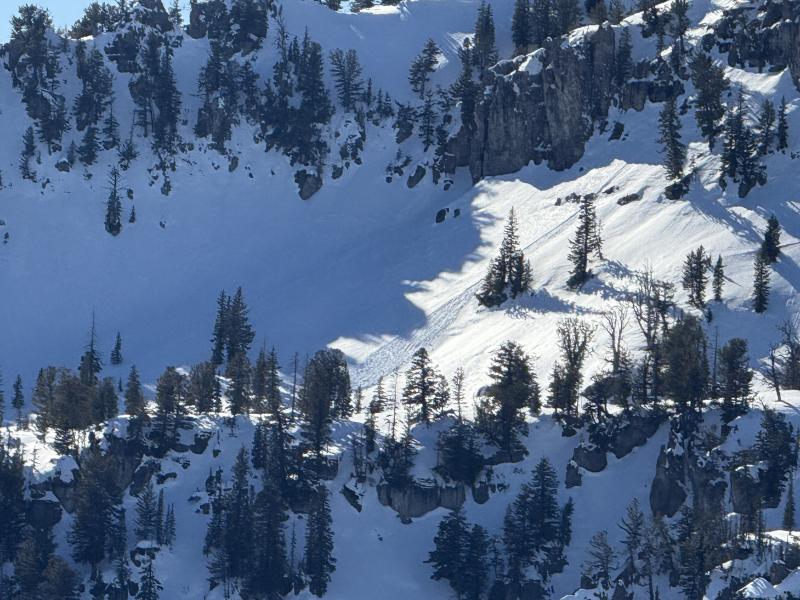
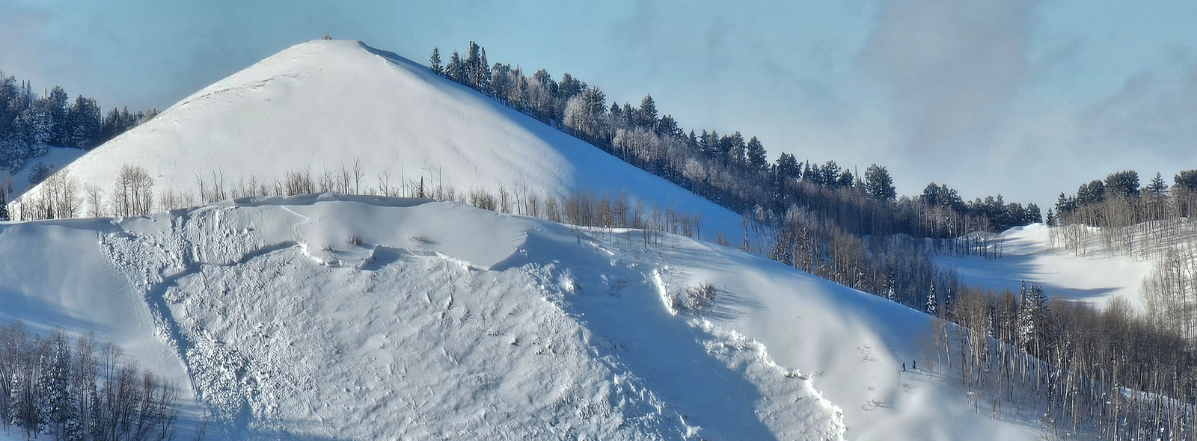
We observed a sizable debris pile from a recent natural loose wet avalanche on Thursday in Upper Steam Mill Canyon.

For all observations and avalanche activity in the Logan zone, go HERE

Avalanche Problem #1
Wind Drifted Snow
Type
Location
Likelihood
Size
Description

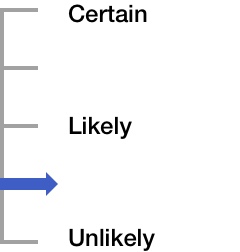
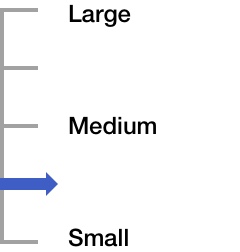
Especially in the northern part of the forecast zone, where more snow will likely accumulate, small slabs of wind-drifted new snow will form on lee slopes and in and around terrain features. People could trigger soft wind slabs up to around a foot deep (larger in the north and smaller in the south), and some of these could be quite sensitive. The size of potential wind slabs depends on the accumulation amounts and the wind, with larger avalanches possible in areas with significantly more new snow accumulation and on slopes where more wind deposition occurs.

Additional Information

All backcountry travel involves inherent risk...

  • Travel with a partner, and cross or ride slopes steeper than 30 degrees one at a time while the rest of your group watches from a safe spot.
  • Ensure that everyone in the group has avalanche rescue equipment (a transceiver, probe, and shovel) and knows how to use it.

-----------------------------------------------------------------------------------------------------------------------------------------------------------------

-For all questions on forecasts, education, Know Before You Go, events, online purchases, or fundraising, call 801-365-5522.

Did you know the UAC hosts a podcast? Episode 2 of Season IX is just out - AI, Machine Learning, and the Value of Expert Intuition at the Utah Avalanche Center.

Are you interested in learning more about avalanches? Visit our education page for details on all our classes.

For more information, visit the UAC weather page here: UAC Weather Page For Logan-specific weather, go here: Logan Mountain Weather

-Remember, the information you provide could save lives, especially if you see or trigger an avalanche. To report an avalanche or submit an observation from the backcountry, go HERE

-Receive forecast region-specific text message alerts to receive messages about changing avalanche conditions, watches, and warnings. Sign up and update your preferences HERE

This forecast is from the U.S.D.A. Forest Service, which is solely responsible for its content. This forecast describes general avalanche conditions and local variations always occur.

General Announcements
This information does not apply to developed ski areas or highways where avalanche control is normally done. This forecast is from the U.S.D.A. Forest Service, which is solely responsible for its content. This forecast describes general avalanche conditions and local variations always occur.